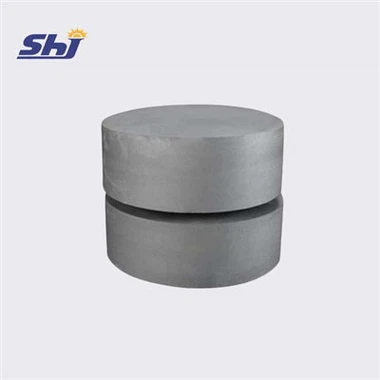
Isotropic Graphite
Looking for top-notch Isotropic Graphite? Look no further! Our company specializes in offering a wide range of high-quality isostatic, molded, extruded, and vibration graphite materials. Whether you need graphite blocks, rods, or tubes, we have got you covered.
Description
High-Performance Isostatic (Isotropic) Graphite Materials
Isotropic Graphite(also known as isostatic Graphite) is an advanced artificial graphite material characterized by its uniform microstructure and consistent properties in all directions. Produced through Cold Isostatic Pressing (CIP) technology, it offers unparalleled thermal, electrical, and mechanical stability. At SHJ CARBON, with over 26 years of expertise in carbon material solutions, we engineer and supply premium isotropic graphite that meets the most demanding applications, from semiconductor manufacturing to high-temperature industrial furnaces.

Key Features of Isotropic Graphite
Our high purity isotropic graphite offers superior quality and performance for industries that require reliable and efficient materials. Here are the standout features that make our product a top choice:
- Fine Grain Structure: The micro-particle size ensures the material has exceptional strength and resilience. This fine grain isotropic graphite excels in high-precision applications.
- Isotropic Properties: The cold isostatic pressing method creates a uniform structure, providing consistent physical properties in all directions, crucial for components exposed to extreme environments.
- High Purity: We produce graphite with minimal impurities, making it ideal for high-end applications where purity is paramount.
- High Thermal Resistance: This material performs exceptionally well in high-temperature applications, making it suitable for use in industries like aerospace and electronics.
- Excellent Electrical Conductivity: Isotropic graphite provides high conductivity, making it a go-to material for electrical components and systems.
Technical Specifications
| Grade | Bulk Density |
Shore Hardness |
Ash Content |
Compressive Strength |
Flexural Strength |
Resistivity | Thermal Grain Conductivity Size |
Grain Size |
| ■IS-11 | 1.82g/cm³ | 63HSD | 50PPM | 115Mpa | 52Mpa | 10~15μQm | 120W/mk | 8~10μm |
| ■IS-15 | 1.90g/cm³ | 72HSD | 50PPM | 160Mpa | 70Mpa | 11~13μΩm | 110~120W/mk | 5μm |
| ■IS-14 | 1.85g/cm³ | 68HSD | 50PPM | 120Mpa | 62Mpa | 11~13μΩm | 100~120W/mK | 7μm |
| ■IS-41 | 1.78g/cm³ | 76HSD | 100PPM | 122MPa | 69MPa | 15.7μΩm | - | 10μm |
| ■IS-42 | 1.78g/cm³ | 65 HSD | 300PPM | 113Mpa | 57Mpa | 12.5μΩm | - | 13μm |
| ■ IS-51 | 1.81g/cm³ | 60HSD | 50PPM | 90Mpa | 45Mpa | 11~14μΩm | - | 12μm |
| ■IX-11 | 1.80g/cm³ | 85HSD | 200PPM | 180Mpa | 90Mpa | 25μQm | - | 4μm |
| ■IX-12 | 1.81g/cm³ | 92HSD | 200PPM | 190Mpa | 92Mpa | 25μΩm | - | 4μm |
| ■FM-12 | 1.75g/cm³ | 42HSD | 500PPM | 65Mpa | 38Mpa | 8~11μΩm | 110~120W/mk | 13μm |
| ■FM-13 | 1.85g/cm³ | 48HSD | 50PPM | 85Mpa | 46Mpa | 8~10μΩm | 130~140W/mk | 13μm |
| ■FM-22 | 1.80g/cm³ | 50HSD | 1000PPM | 75Mpa | 38Mpa | 12μΩm | - | 13μm |
Applications of Isotropic Graphite in Various Industries
At SHJ CARBON, we specialize in providing tailored isotropic graphite solutions designed to meet the unique needs of various industries. Our products deliver the consistent performance, high purity, and exceptional durability required for demanding applications. Below are the key industries that rely on isotropic graphite to enhance their processes and products:

Semiconductor Manufacturing
In the semiconductor industry, precision and purity are critical. Isotropic graphite is used extensively for its ability to maintain high-performance standards in environments that require flawless precision and minimal defects. The material's high purity ensures that components made from it do not introduce unwanted contaminants, which could affect the efficiency or performance of sensitive semiconductor equipment. It is used in processes like wafer handling, etching, and as a component in furnace and reactor systems for semiconductor manufacturing. With its excellent machinability and uniform physical properties, isotropic graphite helps ensure high-yield production and long-lasting equipment performance, making it a crucial material for this rapidly advancing industry.
Electrical Discharge Machining (EDM)
Electrical Discharge Machining (EDM) is an advanced manufacturing process that uses electrical sparks to cut or shape materials. Isotropic graphite is widely used in this application as an electrode material due to its excellent conductivity, precision, and high resistance to wear during the machining process. Its ability to withstand the intense heat generated by the electrical sparks makes it a preferred choice for creating intricate parts with tight tolerances. Isotropic graphite electrodes provide a balance of strength and thermal stability, ensuring high-quality outcomes in the EDM process. It is especially valued for its consistent material properties, which help achieve precise cuts and reduce the need for post-processing. This makes it ideal for high-precision applications in industries like tool making, mold manufacturing, and automotive component production.


High-Temperature Furnaces
High-temperature furnaces are essential in industries like metal processing, ceramics, and industrial coatings, where parts are subjected to extreme heat. Isotropic graphite excels in these environments, offering unparalleled thermal stability and resistance to thermal shock. Our graphite is used for heating elements, furnace linings, and crucibles due to its ability to withstand extreme temperatures without degrading. Unlike other materials, isotropic graphite maintains its structural integrity under rapid temperature fluctuations, ensuring longevity and consistent performance. This makes it a go-to material for industries that rely on high-temperature processes, such as metal casting, ceramic sintering, and high-performance coatings. Its high thermal conductivity also helps in efficient heat transfer, optimizing energy usage and reducing operational costs.
Automotive Industry
The automotive industry demands materials that can withstand extreme conditions, including high temperatures, friction, and wear. Isotropic graphite is widely used in the production of engine components, brake systems, and sealing materials. Its ability to resist wear, coupled with its high thermal resistance, makes it ideal for use in high-performance automotive applications. For example, graphite seals are used in engines to prevent leakage under high pressure, while brake components made from isotropic graphite provide enhanced durability and heat resistance. Additionally, graphite's excellent machinability allows for the precise manufacturing of custom components that meet the rigorous demands of the automotive industry. The use of isotropic graphite in automotive applications helps improve performance, reliability, and safety, particularly in electric vehicles (EVs), where advanced materials are increasingly needed for battery cooling systems and energy-efficient motors.

The Manufacturing Process: Cold Isostatic Pressing (CIP)
The cold isostatic pressing (CIP) method is the key to producing high-quality isotropic graphite. By applying pressure uniformly from all directions, this process ensures a dense, uniform material that excels in both strength and performance. The result is a graphite product that maintains consistent quality and precision, even in highly demanding conditions.
The CIP process also helps in achieving ultra-fine grain structures, making our graphite suitable for applications requiring detailed machining and high-performance components.

Why Choose SHJ CARBON
Technology First
We offer a variety of transmission components
25+ Years of Industry Experience
Proven expertise in carbon and graphite insulation for high-tech manufacturing.
Trusted by Top Manufacturers
Long-term supplier to leading electronics, semiconductor, and solar PV companies.
Custom Engineering Support
Tailored designs in boards, cylinders, and complex 3D shapes to match exact specifications.
Advanced Production & Purification
Secondary high-temperature treatment up to 2800 °C for exceptional purity.
Surface Treatment & Customization Options
SHJ CARBON offers a range of surface treatments and customization options to meet your specific operational requirements:
- Edge Sealing – Prevents particle shedding and improves material integrity.
- Corrosion Protection – Specialized coatings that enhance the material's resistance to chemical damage in harsh environments.
- Laminated Graphite Foil Layers – Adds extra strength and heat resistance, perfect for more demanding applications.
- 3D Shaped Processing – Custom-made to fit complex furnace geometries or specialized heat shield designs.
- Custom Finishes for Different Applications – Tailored surface treatments to enhance durability, energy efficiency, and performance.
|
Surface Treatment Type |
Protection Against Dust |
Airtightness |
Surface Protection |
Shock Resistance |
Key Advantages |
|
No Surface Treatment |
– |
– |
– |
– |
– |
|
Graphite Paper Lamination |
○ |
○ |
○ |
○ |
Good air permeability and low cost |
|
Carbon Cloth Lamination |
○ |
○ |
○ |
○ |
Anti-dust penetration and heat loss |
|
Special Coatings |
◎ |
◎ |
◎ |
◎ |
High protection strength, long service life |
|
Special Coatings (Enhanced) |
◎ |
◎ |
◎ |
◎ |
Anti-dust penetration, high protection performance, high purity |
FAQs for Graphite Rigid Felt
Yes, isotropic graphite and isostatic graphite essentially refer to the same material. Both terms describe graphite that is produced using the cold isostatic pressing (CIP) method. This process results in a uniform structure, meaning the material has consistent properties in all directions. Whether referred to as isotropic graphite or isostatic graphite, the material provides excellent thermal stability, electrical conductivity, and mechanical strength, making it ideal for high-precision applications.
Isotropic graphite provides uniform properties in all directions, which makes it ideal for high-precision and high-performance applications. Unlike anisotropic graphite, which has directional properties that can result in weaker points depending on the grain structure, isotropic graphite ensures consistent strength, conductivity, and thermal resistance. This uniformity allows isotropic graphite to excel in industries like semiconductor manufacturing, EDM, and high-temperature furnaces, where performance consistency is critical. Explore the full comparison between isotropic and anisotropic graphite.
High purity isotropic graphite offers several advantages, particularly in high-precision industries. Its minimal impurity content ensures that it does not contaminate sensitive processes, making it ideal for semiconductor manufacturing and other applications where purity is paramount. The uniform structure of isotropic graphite ensures consistent performance, even in extreme conditions. This makes it perfect for applications requiring high thermal stability, electrical conductivity, and long-lasting durability.
Isotropic graphite is highly valued for its exceptional thermal resistance, which allows it to perform well in high-temperature furnaces and other extreme environments. Its ability to maintain structural integrity under rapid temperature fluctuations makes it a preferred material for applications in industries like metal casting, ceramics, and heat-resistant coatings. Isotropic graphite can withstand temperatures up to 3000°C, providing reliable performance in harsh conditions without degradation.
Yes, isotropic graphite can be tailored to meet specific requirements for various industrial applications. Through adjustments in the manufacturing process, such as grain size, purity, and density, isotropic graphite can be customized for use in industries like automotive, electronics, or nuclear power. Customization might include fine-tuning the material's thermal conductivity or electrical properties to meet the precise demands of a particular application, ensuring optimal performance and longevity.
Related content sharing

What is Isostatic Graphite?
Isostatic Graphite is a high-performance material made using cold isostatic pressing (CIP), which applies uniform pressure to fine graphite particles. This results in consistent properties throughout the material, unlike anisotropic graphite, which can have varying properties. Isostatic graphite is ideal for high-precision applications such as semiconductor manufacturing, EDM, and high-temperature furnaces
What are the key properties of isostatic graphite?
Isostatic graphite is known for its uniform structure, achieved through the cold isostatic pressing (CIP) process, which ensures consistent properties in all directions. This gives it high thermal conductivity, making it ideal for high-temperature applications, along with thermal shock resistance that allows it to withstand rapid temperature changes without cracking.

Isotropic vs Anisotropic Graphite
Isotropic graphite and anisotropic graphite differ primarily in their material structure and properties. Isotropic graphite is produced using cold isostatic pressing (CIP), which results in uniform properties in all directions. This makes it highly consistent in strength, thermal conductivity, and electrical performance, ideal for high-precision applications such as semiconductor manufacturing and EDM.
Get in Touch – Request a Quote
If you're looking for high purity isotropic graphite or have specific material requirements, SHJ CARBON is here to help. Contact us today to learn more about our solutions, request a quote, or discuss your project needs with our expert team.
Hot Tags: isotropic graphite, isostatic graphite,, Molded Graphite, Graphite Products, CIP graphite material, Isostatic Graphite, Graphite block for mold, graphite for heat exchanger