

EXPLORE MATERIALS
Choose the Carbon Material Your Furnace Needs
Insulation and load-bearing components serve different purposes. Start with the material category that matches your requirement, then review the technical specifications and custom options below.
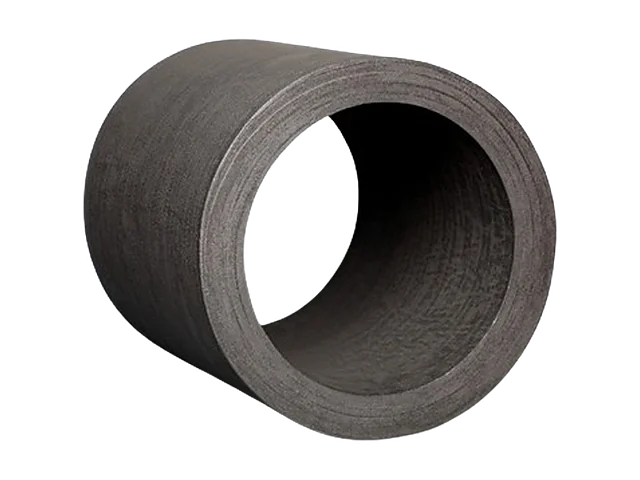
Built Around Your Material & Drawing Requirements
01. Material Selection
Compare felt type, purity, density and relevant operating conditions.
02. Custom Components
Discuss dimensions, drawings and component shapes for replacement parts.
03. Engineering Context
Review the temperature, atmosphere, loading and duty cycle.
Need a Material or Replacement-Part Quote?
Send your product requirements, drawings and quantities. We will review the inquiry and discuss available material options.
-

Graphite Furnace Tube | High-Purity Heating Tubes For Hot Zones
Isostatic Graphite Material: Made from high-quality Isostatic Graphite, offering excellent heat resistance and durability. Custom Sizes: Machined to fit your furnace system, available in diameters
Add to Inquiry -
Custom Graphite Trays For Vacuum & Sintering Furnaces
High-purity, fine-grain graphite: Ensures minimal contamination and consistent performance in vacuum and sintering environments. Precision CNC-machined: Custom dimensions to fit square,
Add to Inquiry -
Vacuum Furnace Hot Zone Materials
Add to Inquiry -
C/C heaters have outstanding features of high strength and elasticity in comparison to traditional graphite materials. The carbonization process significantly enhances the processability of C/C
Add to Inquiry -
Graphite Heating Pipe For Vacuum Furnace Parts
Isostatic Graphite Material: Made from high-quality Isostatic Graphite, offering excellent heat resistance and durability. Custom Sizes: Machined to fit your furnace system, available in diameters
Add to Inquiry -
-
High-purity graphite rigid felt for extreme temperature environments.Low thermal conductivity, reducing energy loss in high-heat applications.Customizable shapes: boards, cylinders, and 3D forms for
Add to Inquiry -
Carbon-Carbon Composite Rings: Revolutionizing The Hot Pressing Field
In the realm of hot pressing technology, carbon-carbon composite rings have emerged as a game-changer, offering a plethora of advantages that are transforming various industries.
Add to Inquiry -
Rigid Graphite Felt For Industrial Furnaces
Graphite Felt - ideal thermal Insulation Material for Industrial Furnaces Graphite felt is an ideal material for heat insulation in vacuum furnaces and inert gas furnaces. SHJ supplies graphite soft
Add to Inquiry


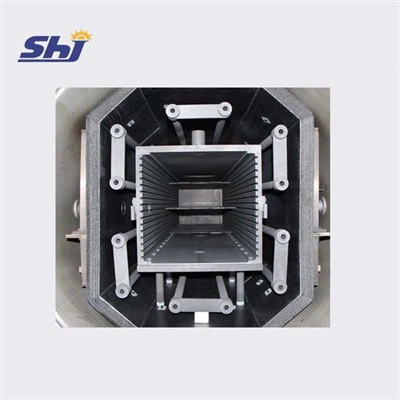


MATERIAL SPECIFICATIONS & BUYER RESOURCES
Explore Materials, Technical Data & Custom Options
Compare rigid graphite felt, soft graphite felt and carbon-carbon structural parts according to their functions in a vacuum furnace. Grade-specific specifications and purchase requirements are organized below.
01 / INSULATION BOARDS
Rigid Graphite Felt
Rigid panels, liners and shaped insulation components for compatible vacuum and non-oxidizing furnace environments.
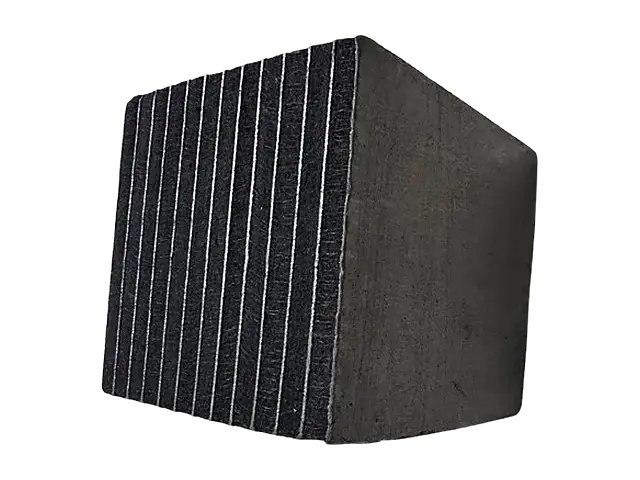
Rigid graphite felt is used for insulation panels, door linings and shaped hot-zone components. Its rigid construction supports panels, cylinders and custom insulation geometries.
Selection depends on density, thermal conductivity, compressive strength, purity and the required dimensions. Temperature and atmosphere must be assessed for the chosen grade.
Common forms: Flat boards, curved panels, cylindrical sections, machined openings and selected surface-lamination options.

Rigid felt insulation — existing product photo
Rigid Felt Surface Treatment Options
Surface configurations may include graphite foil or carbon cloth lamination and selected coatings. The suitability of each treatment depends on the requested material grade and installation conditions.
Published Rigid Felt Specifications
Technical verification: The table contains previously published typical values, not universal guarantees. Confirm the grade, atmosphere, thermal-conductivity test conditions, purity and maximum working temperature before approval. Surface-treatment symbols also require confirmation.
02 / FLEXIBLE INSULATION
Soft Graphite Felt
Flexible insulation sheets for layering, fitting and selected curved-surface configurations.
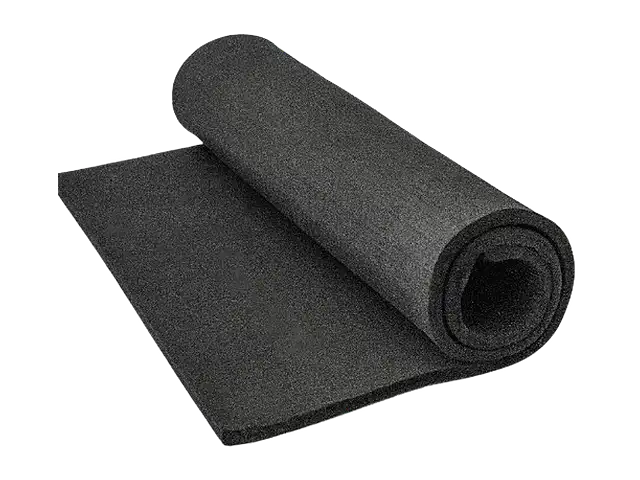
Soft graphite felt provides flexible, lightweight insulation layers where a conformable material is preferred. It may be used in selected furnace insulation and replacement arrangements.
Available options include PAN-based and rayon-based grades. Confirm thickness, density, ash content, operating conditions and handling requirements before choosing a grade.
Selection tip: Compare material-grade data and furnace atmosphere rather than relying only on a quoted maximum temperature.

Soft felt insulation — existing product photo
Published Soft Felt Specifications
Technical verification: Published figures for grades TSF1-01 and TSF3-01 remain unchanged; operating-temperature claims, purity and test conditions should be checked against the applicable material specification.
03 / STRUCTURAL COMPONENTS
Carbon-Carbon Composites & CFC Fixtures
Structural carbon components for compatible furnace fixtures, load supports and custom assemblies.
Carbon-carbon composites (C/C or CFC) combine carbon fibers with a carbon matrix. Unlike insulation felt, these materials may be selected for structural fixtures where component geometry, mechanical loading and thermal cycling are important.
Grade selection must account for load, span, fiber orientation, atmosphere and chemical compatibility. Material properties vary with composite architecture and test direction.
Five Common CFC Component Types


CFC Cylinders & Heating-Related Components
Discuss cylinders and custom heating-related parts according to their function, geometry, electrical requirements and compatibility with the furnace system.
Request Custom Component Quote →Published C/C Composite Specifications
Grade-specific evaluation required: Mechanical properties and conductivity depend on the selected C/C grade and test direction. The previously published table is preserved for technical review and should not be used as a universal design limit.
04 / MATERIAL SELECTION
Choosing Between Felt and C/C Components
Insulation materials and structural components solve different problems; compare function before comparing numerical properties.
Important: Graphite felt should not be selected as a mechanical support simply because it is temperature-resistant. C/C components still need evaluation for oxidation, process chemistry and applied loading.
05 / TECHNICAL PURCHASING
Which Material Properties Should Buyers Check?
Compare grade-specific values with the operating conditions and dimensional requirements of your existing furnace.
Need a material datasheet? Tell us your target purity, density, dimensions and furnace operating conditions. Available technical documents and agreed inspection criteria depend on the selected product and order requirements.
06 / DRAWING-BASED PARTS
Custom Components for Existing Furnace Systems
Replacement components often need to fit an existing hot zone assembly rather than a standard catalog dimension.
SHJ CARBON can discuss non-standard felt insulation, C/C profiles, structural fixtures, machined graphite parts and component modifications based on drawings and application requirements. The manufacturing scope is confirmed for each request.
07 / INDUSTRIAL APPLICATIONS
Applications in Industrial Vacuum Furnaces
Use and compatibility depend on the process material, atmosphere and location of each component.
For application-level information and broader furnace configurations, visit Graphite for Vacuum Furnaces →.
08 / PROCUREMENT WORKFLOW
From Requirements to Component Supply
A clear technical scope helps both engineers and buyers compare material options and prepare a useful quotation.
Technical inquiries receive an initial response within 24 hours. Detailed engineering review and quotation timing depend on the information provided.
09 / BUYER CONFIDENCE
Why Work With SHJ CARBON?
Practical material, machining and international supply discussions for industrial buyers.
10 / ENGINEERING RESOURCES
Material Selection Guides & Product Links
Use the supporting content that matches the material or purchasing question.
Vacuum Furnace Hot Zone Materials → — material options and specifications
Graphite Hot Zone Components → — heating and replacement components
Graphite Hot Zone Testing → — validation and inspection considerations
Graphite Parts Quality Documentation → — documents for technical purchasing
Hot Zone Optimization & Performance → — complete retrofit and engineering service discussions
11 / FREQUENTLY ASKED QUESTIONS
Technical & Purchasing FAQs
Concise answers for vacuum furnace material selection and procurement.
What is the difference between rigid graphite felt and soft graphite felt?
Rigid graphite felt is generally selected where an insulation panel or shaped component needs to maintain a defined geometry. Soft graphite felt is flexible and can be used in layered or fitted insulation arrangements. The appropriate choice depends on the furnace design, material grade, and operating conditions.
Can graphite felt insulation be customized for an existing furnace?
SHJ CARBON offers custom sizing and shaped insulation components subject to the selected material and manufacturing requirements. Drawings, dimensions, photos, and operating conditions help determine whether a suitable replacement can be supplied.
Are carbon-carbon composites suitable for load-bearing furnace fixtures?
C/C composites can be suitable for selected loading racks, trays, support structures, and fasteners. The design must be evaluated against the required load, temperature, atmosphere, component geometry, and material properties.
What information is needed to select graphite felt for a vacuum furnace?
The main information includes operating temperature, furnace atmosphere, insulation arrangement, required thickness, density or purity requirements, available space, and replacement dimensions.
Can graphite and carbon-carbon materials be used in any high-temperature atmosphere?
No. Carbon-based materials can oxidize in oxygen-containing environments, and chemical compatibility depends on the process. Material selection must consider temperature, atmosphere, exposure time, and possible reactions with processed materials.
What documents can be provided for material approval?
Available technical information and inspection documentation depend on the product grade and order requirements. Please specify whether you need a datasheet, dimensional inspection information, material properties, or other agreed quality documents.
Do you supply individual components or complete furnace hot zone solutions?
SHJ CARBON supplies individual materials and custom components. Requirements involving complete hot zone refurbishment or broader system changes should be reviewed separately to define the appropriate engineering scope. For engineering service options, see Hot Zone Optimization and Performance Upgrades
12 / DELIVERY SUPPORT
Packaging & Shipping for Carbon Components
Furnace components need suitable protection in transit. Depending on the product shape and order terms, protective packaging, pallets or wooden cases may be considered. Packing and transportation arrangements are confirmed for each shipment.
READY TO DISCUSS YOUR FURNACE COMPONENT REQUIREMENTS?
Request a Quote for Graphite Felt or C/C Components
Send dimensions, drawings, materials, furnace atmosphere and required quantities. We will review your request and discuss suitable options and quotation requirements.
Initial response to technical inquiries within 24 hours; project review and quotation timing depend on scope.
Email: baikun@shungji.com
We're well-known as one of the leading vacuum furnace service manufacturers and suppliers in China. If you're going to buy high quality vacuum furnace service for sale, welcome to get free ample from our factory. For price consultation, contact us.
CFC channel, High temperature graphite furnace, graphite for vacuum furnace