


Performance Optimization and Upgrades for Vacuum Furnace Systems
SHJ CARBON is a leading provider specializing in the optimization and design upgrades of vacuum furnace hot zone systems. We have extensive experience offering performance diagnostics, hot zone structure modifications, and upgrades to heating elements and insulation systems for industries like Metal Injection Molding (MIM), metal heat treatment, and powder metallurgy. Our services help clients achieve greater process stability and product consistency with lower energy consumption.
Are you experiencing these issues in your production process:
- Inconsistent heating within the same furnace-some products are overcooked, others undercooked, with fluctuating results?
- Furnace temperature set to 1300°C but never reaching the desired level?
- Furnace doors glowing red, increasing energy consumption, and rising electricity costs?
- Frequent damage to furnace door insulation layers, causing production delays with each replacement?
- Products near the furnace opening show significant density or color differences compared to the center?
These issues may seem occasional but are often symptoms of a weakening hot zone. Declining heating system output, aging insulation, graphite oxidation, poor electrode contact, and disrupted airflow can lead to temperature imbalances, higher energy usage, and process instability.
Common situations of thermal field damage

Damaged insulation material

Oxidation of heating element

Automobile manufacturing

Automobile manufacturing
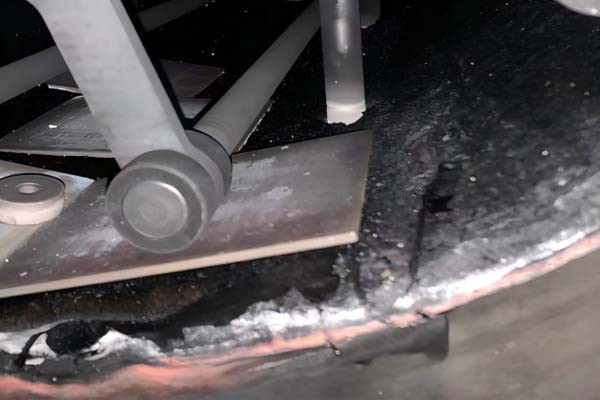
melt-through

graphite paper has deteriorated
From our extensive diagnostic work with vacuum furnaces, we've found that over 70% of performance issues are due to aging hot zone systems, not control system failures. True improvement comes not from replacing the entire furnace but from restoring the hot zone to its original design performance.
With SHJ CARBON's Performance Optimization and Upgrades services, we optimize everything from heating elements and insulation to electrode structures and airflow paths. Our approach restores balance, enhances temperature efficiency, and reduces energy loss, allowing your vacuum furnace to operate efficiently, stably, and controllably-without the need for a complete furnace replacement.
Professional Service Logic - Revitalizing Your Vacuum Furnace
1. Industry-Specific Precision
At SHJ CARBON, we specialize in optimizing hot zone systems for various types of vacuum furnaces, including MIM sintering furnaces, vacuum annealing furnaces, vacuum quenching furnaces, and vacuum brazing furnaces. Our services include:
- Heating system optimization
- Thermal insulation system replacement
- Heating element and electrode replacement
These services ensure that your equipment operates with maximum efficiency and stability.
Additionally, we offer solutions to replace traditional refractory heating elements (such as tungsten, molybdenum, and zirconium dioxide) with lighter, more cost-effective carbon-based heating systems. This approach reduces energy consumption and extends the furnace's lifespan. By adopting modular replacements, we help you avoid the significant costs of replacing the entire furnace, while simultaneously enhancing both energy efficiency and performance.
We proudly provide maintenance and repair services for furnaces from the following renowned manufacturers:
|
|
|
|
|
|
|
|
|
|
|
|
2. Modular Hot Zone Upgrades and Replacement Services
In the vacuum furnace industry, equipment aging is inevitable, but most customers prefer not to replace the entire hot zone. SHJ CARBON offers a solution-modular replacement + performance optimization, allowing you to restore hot zone performance at a much lower cost. Instead of replacing the entire hot zone, we provide custom part replacements that achieve the same results.
|
Module Category |
Service Provided |
Problem Solved |
|
Thermal Insulation |
Replace furnace thermal insulation, optimize heat structure |
Temperature fluctuations at the furnace opening, excessive temperature differences, high energy consumption |
|
Heating Element |
Replace oxidized graphite heating elements, match current load |
Furnace temperature won't rise, insufficient power |
|
Electrode Conductivity |
Optimize contact points, adjust electrode hole structure |
Unstable current, excessive resistance |
|
Reflector and Flow Control |
Optimize heat flow direction and angle of reflection surfaces |
Large temperature differences inside the furnace, localized overheating |
With our modular upgrades, we ensure that your furnace operates more efficiently and cost-effectively, without the need to replace the entire hot zone.
Common thermal field optimization components

Graphite Heating Pipe For Vacuum Furnace Parts

Machined Graphite Plates for High-Temperature Furnace

Graphite Soft Felt Insulation for High-Temperature Furnaces

Graphite Boat for Vacuum & Sintering Furnaces

CFC Bolts and Nuts for Vacuum Furnace Hot Zone Assemblies

CFC Hot Press Mould for Insulation Cylinders

CFC U Profile Components for Industrial Vacuum Furnace

Rigid Graphite Felt For Industrial Furnaces
3. Technical Simulation and Validation
For every hot zone optimization project, SHJ CARBON conducts virtual simulation and thermal balance calculations.
We use the customer-provided blueprints or survey data to create a model of the actual furnace, performing multi-dimensional analysis, including:
- Heat Flow Distribution Simulation: Identifying high-temperature concentration areas and leakage points.
- Temperature Uniformity Simulation: Validating temperature distribution across different structural designs.
- Energy Consumption Prediction Model: Assessing the potential increase in energy efficiency after material replacements.
Through visual simulations, we provide customers with a clear comparison of the "pre-optimization vs post-optimization" effects before construction begins, ensuring decisions are based on data-driven insights rather than experience alone.

Case Study:
Detailed Furnace Heat Field Optimization Process
In that article, we present a real-world optimization case, thoroughly documenting the entire process. If you're facing heat field issues, especially with vacuum furnaces or MIM furnace systems, this detailed case study is a must-read. Our engineers have provided an in-depth explanation of our comprehensive services, including mapping, design, material selection, and installation.
For more insights and to explore the full case study, please click the link below to read the article:
[MIM Furnace Heat Zone Optimization: Practical Case Share]
Hot Zone Optimization & Performance Service Process
Customer Preparation Checklist:
- Furnace model and nameplate parameters
- Photos or videos of the furnace interior
- Process temperature range settings
- Energy consumption data (if available)
Step 1. Initial Communication
Customer provides furnace model, nameplate photos, current furnace status, and abnormal performance details.
Our engineers conduct a preliminary remote diagnosis of the issue.
Step 2. Technical Evaluation
Hot Zone Modeling & Thermal Balance Calculation
Material Selection: Recommendations for heating elements, insulation, and electrodes
Step 3. Proposal Confirmation & Quotation
Provide a list of replacement parts
Confirm quotation and delivery timelines
Step 4. Implementation & Acceptance
On-site measurement → Production & processing → Installation
Performance testing report
Step 5. Post-Implementation Follow-Up
Ongoing support and performance monitoring to ensure continued optimal operation of the furnac
With over 25 years of expertise in graphite and carbon materials, SHJ CARBON ensures optimal material selection for your vacuum furnace. For detailed material guidance, visit our Material Selection & Installation page.
FAQs for Hot Zone Optimization & Performance
1. What conditions do your materials and products operate under?
Our materials and products are widely used in various vacuum furnaces and high-temperature environments, particularly in MIM sintering furnaces, vacuum annealing furnaces, vacuum quenching furnaces, and vacuum brazing furnaces. The materials we use maintain stable performance in high-temperature, low-pressure, and vacuum environments. Our heating elements and insulation materials are designed to withstand up to 1800°C, ensuring efficient operation and long-term stability of the hot zone system.
2. Can you introduce your company and the materials you use?
SHJ CARBON is a technology service provider specializing in vacuum furnace hot zone system optimization and modular upgrades, offering replacement and optimization services for heating elements, insulation layers, electrodes, and more. We use core materials such as high-purity graphite, CFC composite materials, and advanced carbon-based materials. These materials not only offer excellent thermal conductivity and high-temperature resistance but also effectively reduce energy consumption and improve equipment lifespan.
3. Do you manufacture the products yourself or collaborate with other manufacturers?
We primarily have in-house production capabilities, especially for heating elements and insulation materials. We use advanced technologies and equipment to ensure high quality and performance. For specific needs or special materials, we also collaborate with industry-leading partners to develop and supply customized solutions, meeting diverse customer demands.
4. What are the advantages of graphite compared to other materials?
Graphite offers significant advantages in the vacuum furnace heat treatment industry:
Exceptional high-temperature resistance: Graphite can withstand temperatures up to 3000°C, ensuring strong stability in high-temperature environments.
Excellent thermal conductivity: Graphite has low resistance and high thermal conductivity, enabling rapid and stable heating.
Long lifespan and cost-effectiveness: Compared to traditional materials, graphite is durable and cost-effective, significantly reducing maintenance and replacement frequency.
5. Do you provide metal furnace shell manufacturing services? If so, do you do it yourself or collaborate with partners?
We mainly offer vacuum furnace hot zone system optimization and modular replacement services, without involving metal furnace shell manufacturing. However, for customers requiring custom furnace shells, we collaborate with reputable metal fabrication plants in the industry to provide complete furnace body customization services.
6. Which industries do your products apply to?
Our products are widely used across various industries, including:
Metal Heat Treatment: Vacuum annealing, quenching, and other treatments for steel and alloys.
MIM (Metal Injection Molding): Sintering and degreasing of precision structural parts.
Powder Metallurgy and Brazing: Widely used in high-performance material bonding and processing.
We offer customized hot zone optimization solutions for these industries to ensure every vacuum furnace operates efficiently and stably.
7. Can we rely on your help to manufacture products according to the provided drawings?
Yes, we can customize products based on your provided drawings. Whether it's heating elements, insulation layers, or electrode structures, we will manufacture according to your specifications and ensure the best performance in your vacuum furnace.
8. If there are no drawings, can you create heating systems for existing vacuum furnaces?
If you do not have existing drawings, we can customize heating systems for your current vacuum furnace through on-site measurement, thermal balance calculations, and 3D modeling. Based on your equipment specifications, operational needs, and process requirements, we will design an efficient and energy-saving heating system.
9. Do you have experience upgrading furnaces with low operational efficiency?
Yes, we have extensive experience upgrading vacuum furnaces for higher operational efficiency. Whether it's improving temperature uniformity, reducing energy consumption, or enhancing heating system performance, we offer comprehensive optimization solutions. By replacing aging heating elements, insulation layers, and electrodes, we help customers restore their furnace's optimal operational state and reduce long-term operating costs.
Get in Touch – Request a Quote
Simply provide your furnace model and a set of operation photos, and our engineers will complete an initial diagnosis within 24 hours, providing you with a free hot zone performance evaluation report.