


Carbon Fiber Composite Fixtures
CFC Fixture Compared to traditional heat-resistant steel tray racks, CFC Fixture ( carbon carbon composite fixture) has the advantages :
light weight
High mechanical strength
Ultra heat resistant
Energy saving and environment-friendly
Maintenance-free not easy to deformation, and its strength is higher than graphite materials. Therefore, the use of CFC...
Description
Custom CFC Fixtures for Vacuum Furnace and Heat Treatment Applications
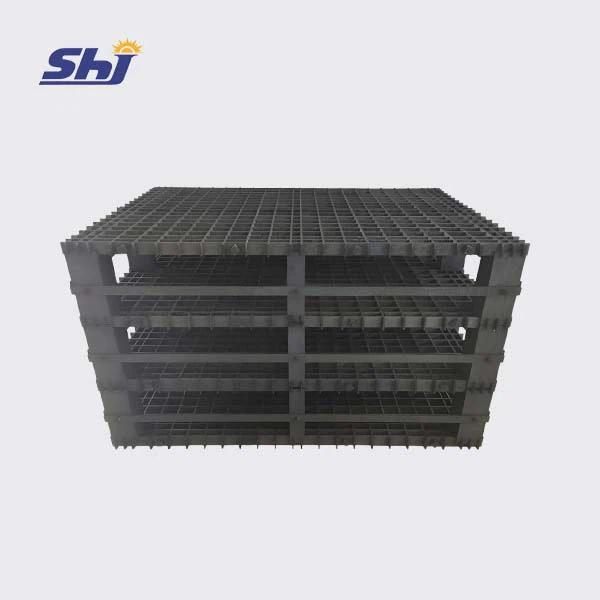
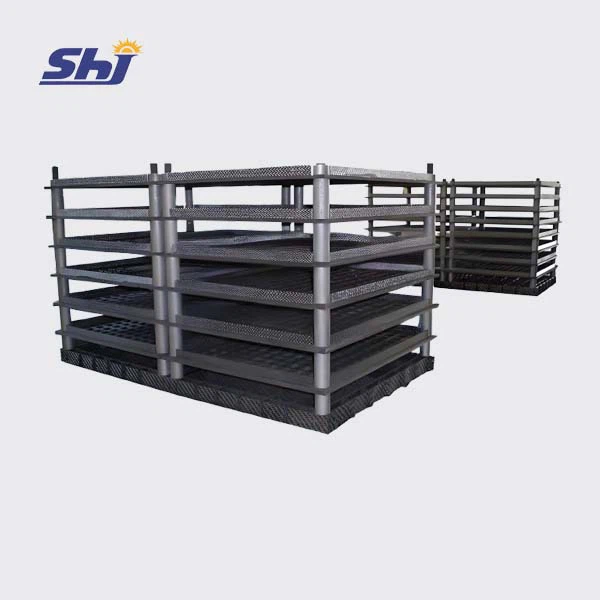
SHJ-CARBON manufactures custom CFC fixtures for vacuum furnaces, heat treatment lines, low-pressure carburizing, PECVD, powder metallurgy and other high-temperature processes. These carbon-carbon composite loading fixtures can be made as trays, grids, baskets, shelves, carrier plates and support structures according to furnace size, loading weight, workpiece shape, process temperature and furnace atmosphere.
For heat treatment plants and furnace equipment users, fixture problems are usually very practical. Steel fixtures may become too heavy, deform after repeated cycles, slow down heating and cooling, or increase handling work. CFC fixtures are used when lower fixture weight, better thermal stability and more efficient furnace loading are required.
Send us your drawing, furnace chamber size, working temperature and loading weight. We can help evaluate the suitable CFC fixture structure and material grade.
CFC Fixtures for High-Temperature Furnace Loading

In a high-temperature furnace, the fixture is not only a holding part. It affects loading weight, heat transfer, cycle time, part support and operating cost. A poorly matched fixture may cause deformation, unstable loading, uneven heating or frequent replacement.
CFC, also known as carbon-carbon composite, is suitable for many high-temperature fixture applications because it combines low weight, high strength and stable performance under repeated thermal cycles. Compared with traditional metal fixtures, a properly designed CFC fixture can reduce thermal mass, shorten heating and cooling time, and make loading and unloading easier.
Common features include:
- Lower weight than many metal fixtures
- Good strength for loading trays, grids and shelves
- Stable structure under high-temperature furnace cycles
- Lower thermal mass for shorter furnace cycles
- Custom structure based on drawings or furnace parameters
CFC Fixture Types We Manufacture
Different furnace processes require different fixture structures. SHJ-CARBON supplies CFC trays, grids, baskets, shelves, carrier plates, racks and custom support fixtures for high-temperature loading. The structure can be designed according to the available furnace space, part arrangement, support span and total batch weight.
| Fixture Type | Typical Use | Common Search Need |
| CFC Trays | Flat loading support for heat-treated parts | CFC tray, carbon-carbon loading tray |
| CFC Grids | Open structure for better heat flow and weight reduction | CFC grid, modular CFC grid |
| CFC Baskets | Batch loading for small or irregular parts | CFC basket, heat treatment basket |
| CFC Shelves | Multi-layer loading inside vacuum or heat treatment furnaces | CFC shelf, CFC shelving |
| CFC Carrier Plates | Carrier support for PECVD, coating and thermal processes | PECVD carrier tray, CFC carrier plate |
| Custom Support Fixtures | Positioning, spacing and supporting special workpieces | High temperature support fixture |


Applications of CFC Fixtures
CFC fixtures are mainly used where the fixture must work under high temperature, repeated thermal cycles and strict loading conditions. In these processes, the fixture structure should be selected together with the material grade. Temperature, atmosphere, load weight and support span all affect the final design.
| Application | Customer Concern | How CFC Fixtures Help |
| Vacuum Heat Treatment | Fixture weight, deformation and cycle time | Low thermal mass and stable support for repeated furnace cycles |
| Low-Pressure Carburizing | High temperature, loading stability and atmosphere compatibility | Fixture structure can be selected based on temperature, load and furnace atmosphere |
| PECVD | Carrier tray weight and dimensional stability | CFC carrier plates and trays can support high-temperature coating processes |
| Powder Metallurgy | Batch loading, support strength and repeated heating | Custom grids, baskets and shelves can be made for batch furnace loading |
| Dewaxing and Sintering | Thermal stability and process cleanliness | Material grade and purification options can be discussed according to process needs |
| Protective Atmosphere Heat Treatment | Fixture life and atmosphere conditions | CFC fixture design can be adjusted according to temperature and atmosphere |
CFC Fixtures vs Metal Fixtures
Many customers consider CFC fixtures when metal fixtures become too heavy, deform after repeated heating, or slow down furnace cycles. CFC is not selected simply because it is a newer material. It is selected when the operating conditions require lower weight, faster thermal response and better stability during repeated high-temperature loading.
| Item | Traditional Metal Fixtures | CFC Fixtures |
| Weight | Heavy, higher handling load | Lower weight, easier loading and unloading |
| Thermal Mass | Longer heating and cooling time | Lower thermal mass, shorter cycle potential |
| Deformation | May warp after repeated thermal cycles | Better structural stability under suitable furnace conditions |
| Energy Use | More energy may be consumed by fixture heating | Lower fixture mass can help reduce energy consumption |
| Design Flexibility | Suitable for many standard welded structures | Suitable for trays, grids, shelves and custom composite structures |
The final choice should still be based on working temperature, atmosphere, load weight, support span and expected service life. For this reason, we normally recommend checking the old fixture drawing or sample photo before confirming a CFC replacement design.
CFC Fixtures vs Graphite Fixtures
Graphite and CFC are both widely used in high-temperature furnace systems, but they are not used in exactly the same way. Graphite is suitable for many machined parts, plates, blocks and furnace components. CFC is often preferred for loading fixtures that need a lighter structure, higher strength-to-weight ratio and more complex shapes such as grids, shelves, baskets and carrier trays.
| Item | Graphite Fixtures | CFC Fixtures |
| Typical Form | Blocks, plates, supports and machined components | Trays, grids, baskets, shelves, racks and carrier plates |
| Structure | Good for solid or simple machined shapes | Good for reinforced loading structures and open-grid designs |
| Weight | Relatively light compared with metals | Lightweight with composite reinforcement |
| Load-Bearing Design | Depends on geometry and grade | Can be designed for fixture loading, span and support points |
Recommended Specification
FEATHERMO C/C Composites Strength and Thermal Stability
CFC fixture performance is related to material grade, fiber structure, density, thickness and the final fixture design. For heavy loading fixtures, strength and support span need to be checked carefully. For lightweight trays and carrier plates, the design may need to balance rigidity, weight and cost.
| Grade | Bulk Density | Flexural Strength |
Young's Modulus |
Interlaminar Shear Strength |
Compressive Strength |
Electrical Resistivity |
Temperature Rating |
| FE-80 [Short fiber] |
1.65g/cm³ | 200MPa | 45GPa | 18MPa | 120MPa | 20μΩm | 2000℃ |
| FE-12 [Long fiber] |
1.2g/cm³ | 120MPa | 40GPa | 10MPa | 100MPa | 15~40μΩm | 2000℃ |
| FE-14 [Long fiber] |
1.4g/cm³ | 120MPa | 40GPa | 10MPa | 100MPa | 15~40μΩm | 2000℃ |
| FE-25 [Long fiber] |
1.5g/cm³ | 150MPa | 30GPa | 12MPa | 140MPa | 15~30μΩm | 2000℃ |
*The parameters in this table are for standard products. If high-purity products are required, purification treatment can be provided, with purified ash content of ≤20PPM maximum.
*The above values are typical values, not guaranteed values. Final material selection should be confirmed according to fixture structure and operating conditions.
*Special sizes, fixture structures and high-end C/C composite products can be customized after technical discussion.
What Information Is Needed for a Custom CFC Fixture Quote?
A custom CFC fixture cannot be selected by material name alone. To check whether the fixture should be made as a tray, grid, basket, shelf or reinforced support structure, we need to understand the furnace and the loading condition. A drawing is helpful, but a sample photo or simple sketch can also be used for early discussion.
| Information Needed | Example |
| Furnace Type | Vacuum furnace, LPC furnace, PECVD equipment, sintering furnace |
| Furnace Chamber Size | Usable loading length, width and height |
| Working Temperature | Normal operating temperature and peak temperature |
| Furnace Atmosphere | Vacuum, inert gas, protective gas or carburizing atmosphere |
| Workpiece Size and Weight | Single part weight and total batch loading weight |
| Loading Method | Tray loading, shelf loading, grid support or basket loading |
| Current Fixture Problem | Warping, heavy weight, long cycle time, short service life |
| Drawing or Photo | CAD drawing, sketch, old fixture photo or sample dimensions |
For heavy-duty loading fixtures, the final load capacity should be checked according to fixture structure, material grade, thickness, support span and furnace conditions.
Why Buyers Choose SHJ-CARBON for Custom CFC Fixtures
Custom CFC Fixture Support
Material selection, structure discussion and drawing-based manufacturing for high-temperature furnace users.
We work with customers who need practical fixture solutions for vacuum heat treatment, LPC, PECVD, powder metallurgy and other high-temperature processes. The goal is not to recommend the most expensive material, but to match the fixture structure with the real furnace condition.
Material Selection Based on Process Conditions
Different furnace temperatures, atmospheres and load weights require different C/C composite grades. We help check the basic operating parameters before recommending a material.
01
Fixture Structure Discussion
For trays, grids, shelves and baskets, structure matters as much as material. We review loading method, support span and workpiece arrangement to reduce unnecessary weight and improve loading stability.
02
Drawing-Based Custom Manufacturing
We can manufacture CFC fixtures according to drawings, samples or confirmed design requirements. Standard and custom structures can both be discussed.
03
Support for Replacement and New Furnace Projects
Some customers replace heavy metal fixtures. Others need new CFC loading systems for a furnace line. In both cases, we focus on furnace space, loading weight, process temperature and long-term use.
04
Product Key Technologies
Process Compatibility
SHJ-CARBON CFC fixtures can be discussed for common high-temperature applications, including:
- Vacuum heat treatment
- Low-pressure carburizing
- PECVD carrier and support applications
- Protective atmosphere heat treatment
- Powder metallurgy and sintering processes
Before production, we recommend confirming the temperature, atmosphere, loading weight and fixture structure to avoid material mismatch.
Send Drawing for CFC Fixture Evaluation
If you are replacing a metal fixture, improving furnace loading, or designing a new CFC fixture system, please send the available drawing or basic process information. Our team can review the fixture type, material grade and structure direction before quotation.
Useful information includes:
- Fixture drawing, sketch or sample photo
- Furnace chamber size and loading method
- Working temperature and atmosphere
- Single part weight and total batch load
- Current fixture problem or expected improvement
Contact SHJ-CARBON to discuss custom CFC trays, grids, baskets, shelves and loading fixtures for your furnace process.

FAQ About CFC Fixtures
What are CFC fixtures used for?
CFC fixtures are used as loading trays, grids, baskets, shelves, carrier plates and support structures in vacuum furnaces, heat treatment, LPC, PECVD, powder metallurgy and other high-temperature processes.
Can CFC fixtures be customized according to furnace size?
Yes. CFC fixtures can be customized according to furnace chamber size, usable loading space, workpiece geometry, loading method, working temperature and furnace atmosphere.
How much load can a CFC fixture support?
The load capacity depends on fixture structure, material grade, thickness, support span, support points and furnace conditions. For heavy-duty loading fixtures, please provide the drawing, batch weight and working temperature for evaluation.
Are CFC fixtures better than metal fixtures?
CFC fixtures are often selected when lower weight, lower thermal mass and better resistance to thermal deformation are required. Metal fixtures may still be suitable for some processes, so the final choice should be made according to temperature, atmosphere, load and service requirements.
Are CFC fixtures better than graphite fixtures?
Graphite is suitable for many furnace components and machined parts. CFC is often preferred for loading fixtures that require stronger reinforced structures, lighter weight and complex designs such as trays, grids, shelves and baskets.
Can CFC fixtures be used in vacuum furnaces?
Yes. CFC fixtures are widely used in vacuum heat treatment and related high-temperature furnace applications. The material grade and structure should be selected according to working temperature, atmosphere and loading condition.
What should I provide for a custom CFC fixture quotation?
Please provide the fixture drawing or photo, furnace size, working temperature, furnace atmosphere, workpiece size, total loading weight, loading method and current fixture problem. This information helps us recommend a suitable CFC fixture design.
Hot Tags: Carbon Fiber Composite Fixtures,carbon fiber composite fixtures,carbon fiber fixtures,composite fixtures carbon fiber,carbon fiber fixture manufacturer, graphite block for glass, graphite rod, CIP graphite block, artificial graphite block, graphite box for batteries, Vibration Molded Graphite


