


Graphite Rods in Vacuum Furnaces: 3 Common Issues and solutions
Nov 28, 2023
As an important heating element in vacuum sintering furnaces, graphite rods have a wide range of applications. However, in actual use, graphite rods may have some common problems. This article describes these graphite materials problems and their corresponding solutions.
Graphite Rods in Vacuum Furnaces: Solving 3 Common Problems
In the application of graphite rods in vacuum sintering furnaces, the following 3 common issues may arise:
Uniformity Concerns
The uniformity of graphite rods plays a crucial role in maintaining consistent temperature distribution within the furnace. Insufficient uniformity can lead to uneven temperature distribution, impacting the quality of sintered parts. Choosing a high-purity graphite rod with excellent uniformity is essential to ensure stable and even temperatures in the furnace.
Antioxidant Properties
The antioxidant properties of graphite materials are critical. When heated in air, a protective silica film forms on the surface, preventing oxidation. However, the silica film may be damaged in a vacuum sintering furnace with intermittent use, reducing the rods' antioxidant capabilities. To address this, maintaining stable furnace temperatures during intermittent use is crucial to preserve the oxidation resistance of the graphite rods.
Thermal Expansion Coefficient
The coefficient of thermal expansion in graphite rods is linked to their carbon content-higher carbon content results in a greater coefficient of thermal expansion. In a vacuum sintering furnace, as the temperature rises, rods expand. Mismatched coefficients of thermal expansion may cause stress between the rods and the furnace wall, affecting rod longevity. Therefore, selecting graphite materials tailored to the furnace's temperature range and process conditions is essential.
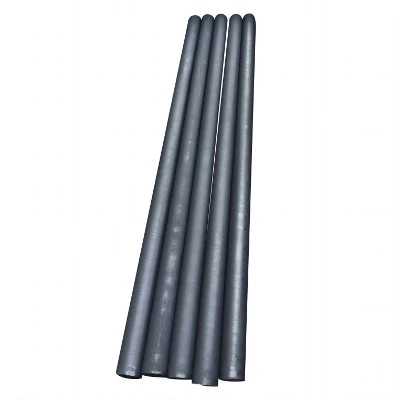
Key Considerations for Using Graphite Rods in Vacuum Furnaces
- Firstly, maintaining a smooth surface on the graphite materials is essential to minimize friction against the furnace wall. This practice extends the lifespan of the graphite rods and reduces impurities and contamination resulting from friction.
- Secondly, ensuring an appropriate clearance between the graphite rod and the furnace wall is vital to prevent ablation. Contact between the graphite rod and the furnace wall can lead to ablation, diminishing electrical conductivity, and thermal efficiency while causing damage to the furnace wall. Maintaining a suitable gap is imperative to prevent these issues.
- Lastly, regular inspections of rods are necessary, and damaged rods should be promptly replaced. This proactive approach ensures the normal operation of the rods, preventing production accidents that could arise from rod damage.
By adhering to these considerations, the application of graphite rods in vacuum furnaces can be effectively optimized, enhancing the lifespan of the rods and the quality of sintered parts. This not only boosts production efficiency but also reduces overall production costs, leading to increased economic benefits for the enterprise.
As a leading graphite rod manufacturer, SHJ suggests you choose the suitable graphite rod according to the temperature range of the vacuum sintering furnace and process conditions. You can consult professional online customer service to ensure the selection of suitable graphite rods.
Regarding graphite materials and graphite rod products, please feel free to contact us with any questions!


