Application Of Isostatic Pressing Graphite Materials in The Photovoltaic Field
Oct 08, 2023
At the heart of photovoltaic technology lies a material called graphite. Commonly found in pencils, graphite has the unique ability to conduct electricity and withstand high temperatures. But not all graphite is created equal. Enter isostatic graphite, also known as equal-pressure graphite.
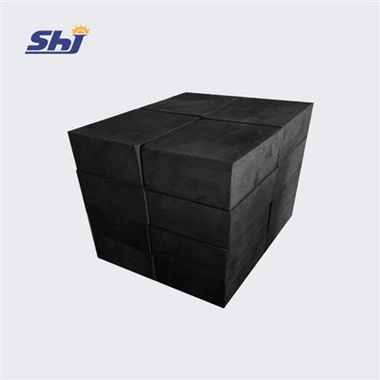
Isostatic graphite is a special type of graphite that is produced through a process known as isostatic pressing. With this method, graphite is compressed under high pressure from all directions, resulting in a material that is incredibly strong, durable, and uniform in its properties. This makes it an ideal material for a wide range of applications, including the field of photovoltaics.
In photovoltaics, isostatic graphite is used as a key component in the manufacture of solar cells, the building blocks of solar panels. Solar cells are made by depositing a thin layer of silicon on a substrate material, which is usually made of glass or plastic. Isostatic graphite is used as the substrate material for the silicon layer, providing a sturdy and durable foundation for the solar cell.

The main advantage of using isostatic graphite in photovoltaics is its ability to withstand a variety of environmental conditions. Solar panels are typically installed in outdoor environments, where they are exposed to a range of weather conditions such as rain, wind, and extreme temperatures. Isostatic graphite is extremely resistant to thermal shock and offers excellent thermal conductivity. This means that it can absorb and dissipate heat quickly, allowing the solar cells to operate at peak efficiency even in harsh weather.
Furthermore, isostatic graphite has a low coefficient of thermal expansion. This means that it does not expand or contract significantly when subjected to changes in temperature. As a result, it maintains its shape and stability over time, ensuring reliable performance of the solar panels.

In conclusion, the use of isostatic graphite in the field of photovoltaics is a promising development that holds great potential for the future of clean energy. Its unique properties make it an ideal material for the manufacture of solar cells and help to ensure their reliable and efficient performance. As we look towards a cleaner and more sustainable future, isostatic graphite will undoubtedly play a key role in helping us achieve our goals.