Long Fiber Carbon Felt vs Short Fiber Rigid Felt: Best Choice for Induction and Vacuum Furnaces
Apr 20, 2026
Introduction
In high-temperature insulation projects, customers often ask the same question: what is the difference between long fiber carbon felt and short fiber rigid felt, and which one should be chosen for a specific furnace application?
Although both materials belong to the carbon and graphite felt family, they are not designed for the same insulation role. Their differences in fiber structure, material form, installation method, and thermal-field matching determine where each one performs best.
For furnace manufacturers, engineers, and buyers, the key issue is not simply understanding the product name. What matters more is choosing the right material for the actual furnace design and operating condition.
Based on SHJ CARBON's 26 years of experience in graphite and carbon-based material solutions, the practical recommendation is clear:
Short fiber rigid felt is typically recommended for induction furnace insulation.
Long fiber carbon felt is more suitable for vacuum furnaces and flexible hot-zone insulation structures.
This article explains the technical differences and selection logic behind that recommendation.

Why This Comparison Matters in Furnace Insulation
In high-temperature furnaces, insulation materials are not selected only by density or thickness. The right choice depends on how the insulation layer will work inside the furnace.
Customers usually want to know:
- Which material is better for an induction furnace?
- Which one is more suitable for a vacuum furnace?
- Which material fits thick insulation structures better?
- Which one is easier to cut and install?
- Which one performs better in curved hot-zone layouts?
These are not just product questions. They are application-driven selection questions.
Choosing the right insulation material can improve:
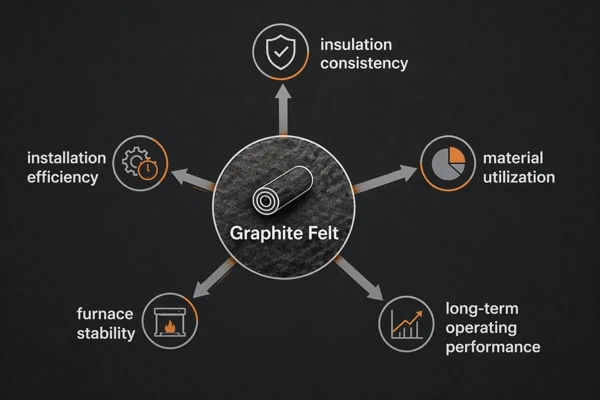
That is why this comparison matters. The goal is not only to define the two materials, but also to help customers make a more practical selection decision.
What Is Long Fiber Carbon Felt?
Long fiber carbon felt is made from continuous carbon fibers that go through stabilization, carbonization, and graphitization. Depending on the application, the raw fibers may be PAN-based, pitch-based, or rayon-based.
Its most important feature is that the fiber structure remains continuous throughout the material.

Typical Characteristics of Long Fiber Carbon Felt
- Soft and flexible
- Bendable
- Lightweight
- Good structural integrity
- Suitable for wrapping and layering
- Easy to fit curved or cylindrical surfaces
Because of this continuous fiber structure, long fiber carbon felt is generally used as a flexible insulation material. It is especially suitable when the insulation design requires the material to conform to curved surfaces or wrap around a hot zone.In practical applications,
- Vacuum furnace insulation
- Crystal growth furnace hot zones
- Layered insulation systems
- Cylindrical heating zones
- Flexible thermal-field structure

What Is Short Fiber Rigid Felt?
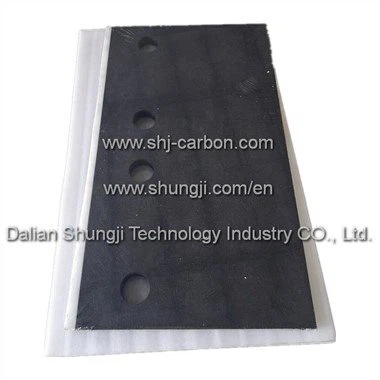
Short fiber rigid felt is made from short chopped carbon fibers that are formed and heat-treated into a rigid insulation structure.
Compared with long fiber carbon felt, its fiber structure is shorter and more suitable for forming a stable board-like or thick-panel insulation layer.

Typical Characteristics of Short Fiber Rigid Felt
- Rigid and dimensionally stable
- Higher density
- Suitable for thick insulation sections
- Easy to cut into custom sizes
- Suitable for flat or regular structures
- Practical for panel-style installation
Short fiber rigid felt is mainly valued as a rigid board-style insulation material. Its advantages are not limited to rigidity itself. In real projects, it also offers:
- Easier dimensional control
- Better suitability for thick board designs
- More efficient cutting and fitting
- Better matching with regular insulation layouts
Long Fiber Carbon Felt vs Short Fiber Rigid Felt:
The key difference between these two materials starts with the fiber structure, and that difference shapes their performance in actual furnace insulation systems.
| Property | Long Fiber Graphite Felt | Short Fiber Rigid Felt |
|---|---|---|
| Fiber form | Continuous filaments | Chopped fibers (mm range) |
| Binder | None | Carbonaceous binder |
| Flexibility | Soft, conformable | Rigid, non-bendable |
| Density | 0.10–0.18 g/cm³ | 0.20–0.50 g/cm³ |
| Fiber orientation | Partially aligned | Random / disordered |
| Thermal conductivity | Anisotropic (higher along fiber direction) | Isotropic (equal in all directions) |
| Insulation uniformity | Less uniform due to orientation | More uniform due to random structure |
| Surface | Smooth, low dust | Rougher, may need coating |
Flexibility and Installation Differences
Long Fiber Carbon Felt for Flexible Fitting
Because it is soft and bendable, long fiber carbon felt is more suitable when the insulation layer needs to:
- Wrap around cylindrical zones
- Conform to curved surfaces
- Be installed in multiple layers
- Adjust to complex hot-zone geometry
This makes it especially useful in furnace structures where flexibility is important.
Short Fiber Rigid Felt for Rigid Installation
Because it is more rigid and shape-stable, short fiber rigid felt is more suitable when the insulation layer needs to:
- Keep a defined board form
- Fit flat or regular structures
- Support thick insulation sections
- Be cut and installed based on exact dimensions
This gives it a clear advantage in projects where the insulation structure is more regular and panel-based.
Thermal Matching: Induction Furnace vs Vacuum Furnace
When customers compare furnace insulation materials, what they really care about is whether the insulation system will be stable and suitable for their furnace.
Long Fiber Carbon Felt in Vacuum Furnace Insulation
- Long fiber carbon felt is more suitable for:
- flexible thermal-field layouts
- curved insulation structures
- wrapped hot-zone systems
- vacuum furnace applications where shape conformity matters
Because of its flexibility and continuous fiber structure, it is easier to use in furnace designs that depend on wrapping, layering, and fitting around complex hot-zone geometry.
Short Fiber Rigid Felt in Induction Furnace Insulation
Short fiber rigid felt is easier to build into stable, regular, and thick insulation layers. This makes it a better match for applications where the insulation layout needs to be more structured and consistent.
This is especially important in induction furnace projects.
Key Recommendation
In current project experience, short fiber rigid felt is typically recommended for induction furnace insulation.
That recommendation is based on practical matching with induction furnace requirements, including:
- regular insulation layout
- rigid board-style structure
- thick insulation design
- easier size processing
- more stable insulation arrangement
At the same time:
Long fiber carbon felt is more suitable for vacuum furnaces and flexible hot-zone insulation structures.
Why Short Fiber Rigid Felt Is Typically Recommended for Induction Furnaces
For induction furnace insulation, the design usually requires:
- stable board-type insulation layers
- regular installation geometry
- easy size control
- efficient cutting and fitting
- thick-section insulation capability
Short fiber rigid felt fits these requirements well because it is:
- rigid enough for board-style installation
- easy to process into required dimensions
- suitable for thick layers
- practical for regular furnace structures
Practical Recommendation
If the project is an induction furnace, short fiber rigid felt is typically the preferred insulation material.
This is not only a theoretical comparison. It is a practical recommendation based on current project experience and application matching.
When to Choose Long Fiber Carbon Felt
Long fiber carbon felt is generally the better choice when the insulation design requires flexibility and conformity.
It is more suitable for:
- vacuum furnace insulation
- curved or cylindrical hot zones
- layered insulation systems
- flexible installation
applications where the insulation must wrap around the structure
Choose Long Fiber Carbon Felt When:
the furnace structure is more complex
the insulation layer needs to follow curved geometry
flexible fitting is more important than rigid board form
the project is a vacuum furnace or a similar flexible hot-zone design
Key Takeaway
Long fiber carbon felt is more suitable for vacuum furnaces and flexible hot-zone insulation systems.
When to Choose Short Fiber Rigid Felt
Short fiber rigid felt is generally the better choice when the insulation design requires rigidity, thickness, and efficient panel-style fitting. It is more suitable for:
induction furnace insulation
regular flat structures
thick insulation layers
large-size cut-to-fit installation
projects that need efficient board processing
Choose Short Fiber Rigid Felt When:
the project is an induction furnace
the insulation layer is based on rigid boards
thick sections are required
cutting and fitting efficiency matters
the structure is regular and panel-oriented
Key Takeaway
Short fiber rigid felt is the key recommended insulation material for induction furnace applications.
How to Select the Right Felt for Your Furnace
A practical material decision can often be made by checking a few key conditions.
Choose Long Fiber Carbon Felt If You Need:
flexible wrapping
curved surface fitting
layered insulation
vacuum furnace hot-zone insulation
easier installation around complex shapes
Choose Short Fiber Rigid Felt If You Need:
induction furnace insulation
rigid board structure
thick insulation sections
cut-to-size panels
regular and stable insulation layout
Information Needed for an Initial Recommendation
furnace type
maximum operating temperature
insulation shape
required thickness
whether on-site cutting is needed
In many cases, this information is enough for a practical preliminary recommendation.
Frequently Asked Questions
-
What is the main difference between long fiber carbon felt and short fiber rigid felt?
The main difference is the material structure and final form. Long fiber carbon felt is flexible and made from continuous fibers. Short fiber rigid felt is rigid and made from chopped fibers in a board-style structure.
-
Which material is typically recommended for induction furnace insulation?
Short fiber rigid felt is typically recommended for induction furnace insulation. It is better suited for thick, regular, and board-style insulation layouts.
-
Which material is more suitable for vacuum furnaces?
Long fiber carbon felt is generally more suitable for vacuum furnaces because it is easier to fit flexible hot-zone structures and curved insulation layouts.
-
Can short fiber rigid felt be cut into custom sizes?
Yes. One of its practical advantages is that it can be processed into custom dimensions, which improves installation efficiency and material utilization.
-
Is long fiber carbon felt better for curved surfaces?
Yes. Because it is flexible and bendable, long fiber carbon felt is better suited for curved surfaces and wrapped insulation systems.
-
How do I choose if I cannot share detailed drawings?
You can start by sharing the furnace type, temperature range, insulation shape, thickness, and whether cutting is needed. That is often enough for an initial recommendation.
Final Thoughts from SHJ CARBON
Long fiber carbon felt and short fiber rigid felt are both widely used in high-temperature insulation, but they serve different design purposes.
Long fiber carbon felt is a flexible insulation solution and is more suitable for vacuum furnaces and curved hot-zone structures.
Short fiber rigid felt is a rigid board-style insulation solution and is typically recommended for induction furnace insulation.
For customers evaluating these two materials, the most important point is not simply the material name, but how well the material matches the actual furnace structure and insulation method.
Based on current application experience, the recommendation is clear:
For induction furnaces, short fiber rigid felt is typically the preferred choice.
For vacuum furnaces and flexible hot-zone insulation systems, long fiber carbon felt is generally the better option.
If you are not sure which material is right for your project, SHJ CARBON can help evaluate the most suitable option based on your furnace type, temperature, insulation geometry, and thickness requirements.
Contact SHJ CARBON
Not sure which felt fits your furnace design? Share your furnace type, working temperature, insulation shape, and required thickness with SHJ CARBON for a practical recommendation.