How to Choose Between Graphite Soft Felt and Rigid Graphite Felt for Vacuum Furnace Insulation
Apr 13, 2026
Introduction
Graphite soft felt and rigid graphite felt are two of the most important graphite felt insulation materials used in vacuum furnace insulation and high-temperature furnace hot zones. Although both materials are designed to reduce heat loss and protect furnace structures under extreme conditions, they differ in density, thermal conductivity, strength, service life, and structural stability. Understanding the difference between graphite soft felt and rigid graphite felt is essential for furnace builders, maintenance teams, and industrial buyers who want better insulation performance, longer service life, and more stable furnace operation.
At SHJ CARBON, we have served high-temperature industrial applications in China for 26 years, supplying graphite and carbon-based materials for demanding thermal environments. Our experience comes not only from material manufacturing, but also from long-term involvement in insulation structures, hot-zone materials, and application requirements across industrial furnace systems. That background allows us to compare graphite soft felt and rigid graphite felt not just by datasheet values, but by how they perform in real high-temperature use.

Graphite Soft Felt and Rigid Graphite Felt: Why the Difference Matters
For many buyers, graphite felt is first understood as a furnace insulation material. But once the selection process goes deeper, the real question is no longer simply whether graphite felt should be used. The more practical question becomes: should the hot zone use graphite soft felt or rigid graphite felt?
This matters because the internal structure of the insulation affects much more than material form. It influences how efficiently heat is retained, how stable the hot zone remains during thermal cycling, how often insulation components need to be replaced, and how well the furnace balances insulation performance with durability. In other words, choosing between graphite soft felt and rigid graphite felt is not only a material decision. It is also a process-performance decision.
What Is Graphite Soft Felt?
Graphite soft felt is a lightweight, flexible, and porous high-temperature insulation material typically made from precursor fibers such as rayon-based or PAN-based fibers. These fibers are first processed into a nonwoven felt structure, then go through oxidation, carbonization, graphitization, and cutting before becoming the final product.
The forming of graphite soft felt mainly happens during the nonwoven stage. This stage is highly process-dependent. Fiber preparation, web formation, layer arrangement, and needle punching all influence the final structure and quality of the felt. After graphitization, the felt becomes a large-area insulation material that can later be cut into sheets, rolls, circular parts, rectangular parts, or preforms for further conversion.
One of the defining features of graphite soft felt is its low density. Typical density is around 0.10 g/cm³, which is one reason it offers excellent thermal insulation. The open fiber network creates many small internal spaces that help reduce heat transfer. High-purity, high-efficiency rayon-based graphite soft felt can have a thermal conductivity of about 0.10–0.15 W/m·K at 1150°C, making it highly suitable for applications where insulation efficiency is the top priority.
Because it is soft and flexible, graphite soft felt is easy to cut, wrap, and fit into complex hot-zone structures. This makes it especially useful in furnace designs where lightweight insulation and close fitting are important.

Before comparing graphite soft felt and rigid graphite felt, some buyers still need to understand the more fundamental difference between carbon felt and graphite felt.
What Is Rigid Graphite Felt?
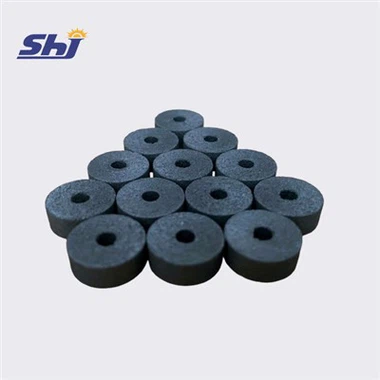
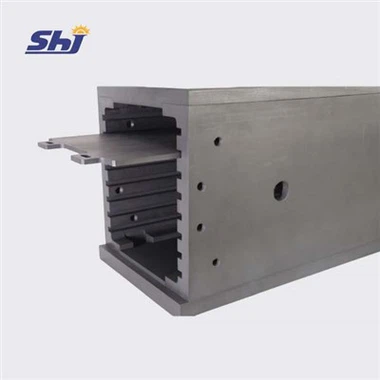
Rigid graphite felt is a reinforced and self-supporting graphite insulation material. In some industrial contexts, it may also be informally referred to as graphite hard felt, but rigid graphite felt is the more standard expression in high-temperature insulation applications.
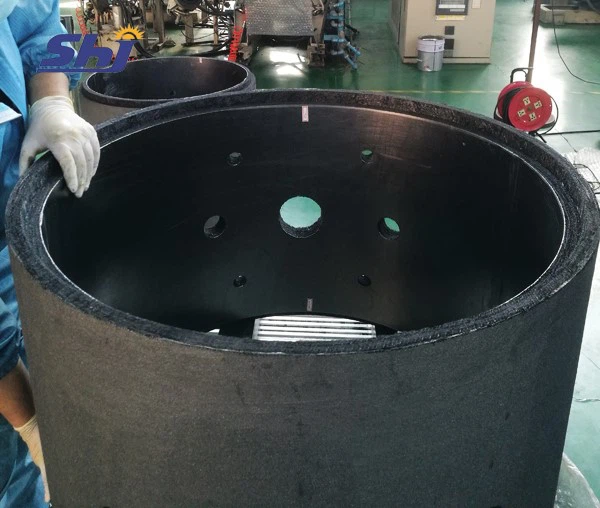
A common production method starts with graphite soft felt as the base material. Multiple layers are cut, impregnated with thermosetting resin or other bonding materials, stacked to the required thickness, cured, and then processed through carbonization and graphitization. During this process, the resin forms a carbon matrix, while the felt acts as the reinforcing phase. The result is a rigid graphite composite insulation material with higher structural stability.

Compared with graphite soft felt, rigid graphite felt has higher density, generally around 0.13–0.25 g/cm³. It also has greater compressive strength, better shape retention, and stronger dimensional stability. After graphitization, it can be machined and further processed according to design needs, including coating or lamination with carbon cloth or graphite paper.
Rigid graphite felt usually has a thermal conductivity of about 0.25 W/m·K at 1150°C. This means its insulation performance is typically lower than graphite soft felt, but in exchange it offers stronger structure and longer service life.
To better understand why rigid graphite felt offers higher structural stability and longer service life, it is also helpful to look at how it is made. You can read our detailed guide on Rigid Graphite Felt Production: Lamination Curing vs. Wet Forming – What's the Difference? to explore the two main manufacturing routes and how they affect final performance.
Graphite Soft Felt vs Rigid Graphite Felt: Key Differences
Choosing the right insulation material becomes easier when the comparison is broken down into practical dimensions.
1. Structure
Graphite soft felt has a loose, fibrous, and highly porous structure. It remains flexible after graphitization and can be bent, cut, or rolled depending on application needs.
Rigid graphite felt has a bonded composite structure. Because of the reinforcement and curing process, it becomes self-supporting and dimensionally stable.
2. Density
Graphite soft felt is lower in density, usually around 0.10 g/cm³.
Rigid graphite felt is denser, typically around 0.13–0.25 g/cm³.
This density difference is important because lower-density insulation materials usually reduce heat transfer more effectively. In most cases, graphite soft felt delivers better insulation efficiency.
3. Thermal Conductivity
Graphite soft felt: about 0.10–0.15 W/m·K at 1150°C
Rigid graphite felt: about 0.25 W/m·K at 1150°C
This is one of the clearest performance differences. Graphite soft felt generally provides better thermal insulation, which helps reduce heat loss from the hot zone to the furnace wall.
4. Mechanical Strength
Graphite soft felt is more flexible but less resistant to compression and structural deformation.
Rigid graphite felt performs better where higher strength, shape retention, and mechanical reliability are required. It is more suitable for applications where insulation components must maintain a defined geometry over long operating cycles.
5. Service Life
In many high-temperature applications, rigid graphite felt lasts longer than graphite soft felt. For example, in some single crystal furnace conditions, graphite soft felt may need replacement after around 6 months, while rigid graphite felt may last about 12 months before replacement. Actual lifetime always depends on furnace temperature, process atmosphere, operating frequency, and maintenance conditions, but the general trend is clear: rigid graphite felt usually offers a longer maintenance cycle.
6. Processing and Installation
Graphite soft felt is easier to cut and adapt to irregular or curved hot-zone designs.
Rigid graphite felt is better suited for machined parts, shaped insulation sections, and applications that require a more stable and durable structure.
Comparison Table: Graphite Soft Felt vs Rigid Graphite Felt
| Item | Graphite Soft Felt | Rigid Graphite Felt |
|---|---|---|
| Structure | Flexible, porous felt | Rigid composite felt |
| Typical Density | ~0.10 g/cm³ | ~0.13–0.25 g/cm³ |
| Thermal Conductivity at 1150°C | ~0.10–0.15 W/m·K | ~0.25 W/m·K |
| Insulation Performance | Better | Good, but lower than soft felt |
| Mechanical Strength | Lower | Higher |
| Shape Retention | Limited | Strong |
| Machining Capability | Limited | Better |
| Service Life | Shorter | Longer |
| Best Use Focus | Maximum insulation efficiency | Structural stability and durability |
How Material Structure Affects Furnace Performance
The difference between graphite soft felt and rigid graphite felt begins with material structure, but it does not end there. These structural differences directly shape real furnace behavior.
Because graphite soft felt has a lighter and more open fiber network, it can reduce heat transfer more effectively. This helps improve heat retention and supports lower heat loss in the hot zone. In practical terms, this can contribute to better thermal efficiency and lower energy demand.
Rigid graphite felt, by contrast, sacrifices some insulation performance in exchange for higher structural stability. Its denser, reinforced structure allows it to hold shape better during repeated thermal cycles and long-term operation. This is important in systems where mechanical reliability, dimensional consistency, and longer replacement intervals are major priorities.
When insulation materials are no longer well matched to process needs, operators may begin to notice slower heating response, longer pump-down or thermal stabilization times, increased power use, worsening temperature uniformity, hot spots near the furnace shell, surface contamination from damaged insulation, or visible cracking and wear in the hot-zone insulation system. That is why the selection of graphite felt insulation should always be linked to the actual operating goals of the furnace.
When Should You Choose Graphite Soft Felt?
Graphite soft felt is usually the better choice when the application priority is:
- maximum insulation efficiency
- lower heat loss
- lower thermal conductivity
- lightweight furnace insulation
- easier fitting for irregular structures
- improved thermal protection for hot-zone surrounding components
If the main goal is to improve insulation performance and reduce heat transfer as much as possible, graphite soft felt is often the preferred option.

When Should You Choose Rigid Graphite Felt?
Rigid graphite felt is usually the better choice when the application priority is:
- longer service life
- higher mechanical strength
- better dimensional stability
- machined or shaped insulation parts
- better resistance to deformation during operation
- reduced replacement frequency in demanding furnace conditions
If the main goal is to maintain structural integrity and extend maintenance intervals, rigid graphite felt is often the stronger solution.
How SHJ CARBON Supports High-Temperature Insulation Applications
For industrial buyers, selecting insulation materials is rarely just about ordering standard sheets or boards. In real projects, the better material is the one that matches the actual thermal structure, service condition, and maintenance target of the equipment.
With 26 years of service experience in China's high-temperature industrial field, SHJ CARBON focuses on graphite and carbon-based materials for demanding thermal applications. We understand that customers are not only comparing material names. They are evaluating how insulation choice affects heat retention, structural durability, replacement cycle, and process stability.
That is why our approach to graphite soft felt and rigid graphite felt is based on application-oriented understanding. Instead of treating both as general furnace consumables, we view them as different solutions for different operating priorities.
Final Thoughts
Graphite soft felt and rigid graphite felt are both important graphite felt insulation materials for vacuum furnace insulation and other high-temperature applications, but they are not the same solution.
Graphite soft felt offers lower density and lower thermal conductivity, which makes it more effective for insulation performance.
Rigid graphite felt offers higher density, stronger structure, better shape retention, and longer service life.
The right choice depends on what matters most in your furnace system: maximum insulation efficiency, longer operating life, or a balance between the two.
For furnace designers, industrial buyers, and maintenance teams, understanding this difference is the first step toward selecting insulation materials more confidently and improving long-term furnace performance.
Need help selecting graphite soft felt or rigid graphite felt for your furnace application? Contact SHJ CARBON for application-focused support on high-temperature insulation materials.