Characteristics of graphite for heat exchangers
Apr 08, 2022
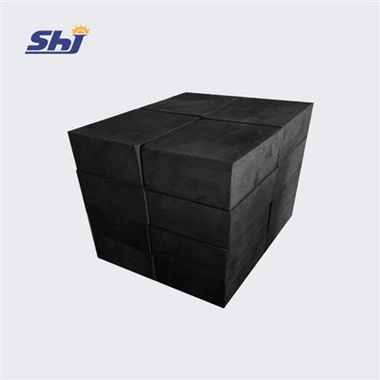
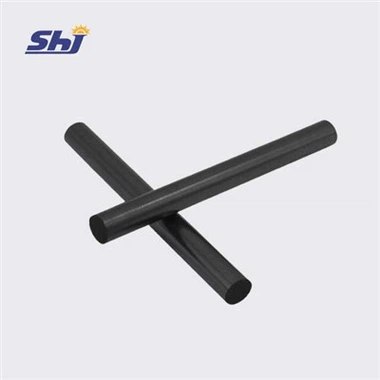
The graphite heat exchanger is a heat exchanger made of graphite for heat transfer components. The graphite used to manufacture the heat exchanger should be impermeable. The commonly used types are impermeable graphite and pressed impermeable graphite.
The chemical process graphite material is mainly artificial graphite. Due to the porous characteristics of graphite, it is usually impregnated with an impregnating agent to make it impermeable graphite, and at the same time enhance its physical properties, so that its strength can be increased by 2-3 times.
01 Corrosion resistance
Graphite itself has excellent corrosion resistance, and is only corroded by some strong oxidizing elements, such as nitric acid, oleum, aqua regia, halogen, etc;
The corrosion resistance of graphite equipment for chemical processes mainly depends on the corrosion resistance and thermal stability of the impregnant used and the pore structure of the graphite.
02 Thermal conductivity
The thermal conductivity of impervious graphite is higher than that of many metals, and the thermal conductivity of several commonly used structural materials can be seen that it is only inferior to copper and aluminum, which is the ideal material for making heat exchange equipment, combustion furnaces and gas coolers.
03 Thermal stability
Graphite has excellent thermal stability, the melting point of unimpregnated graphite is about 4000℃, and the working temperature can reach 3000℃. And the mechanical strength increases with the increase of temperature. The allowable temperature of commonly used synthetic resin impregnated graphite is 205℃.
04 Mechanical strength
The strength of the impregnated graphite depends on the pore distribution, the more the pore distribution, the better the toughness of the graphite, and the lower the pore distribution, the higher the mechanical strength. The isostatic pressing material has more uniform distribution of pores, smaller pores and higher strength than the material formed by die vibration molding.
05 Easy to process
Graphite has good processing performance and is easy to be made into equipment and parts of various structural shapes, with good wear resistance and light weight. Graphite is easy to bond, and most of them can use graphite splicing technology, which is easy to maintain on site.
06 Wear resistance
Graphite itself has certain corrosion properties and easy processing properties. In order to adapt to better wear resistance, a ceramic material can be compounded on its surface to make it have strong wear resistance, thereby effectively improving the service life.
07 Thermal expansion coefficient
Graphite has a good thermal expansion coefficient, which is superior to various metal materials, and has stable dimensional accuracy in high temperature applications.
https://www.shj-carbon.com/graphite-products/graphite-machined-products/graphite-tube-for-heat-exchanger.html