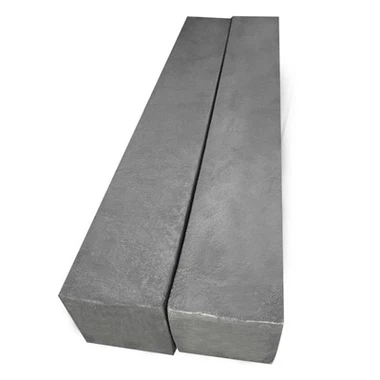
PAN vs Rayon Graphite Felt: Choosing the Right Insulation for Vacuum Furnaces
Apr 27, 2026
Introduction
When customers look for graphite felt for vacuum furnace insulation, one of the most common questions is simple but important: should they choose PAN-based graphite felt or rayon-based graphite felt?
The answer is not the same for every furnace. PAN and rayon graphite felt can both be used as high-temperature insulation materials, but they are selected for different reasons. The right choice depends on furnace temperature, vacuum level, atmosphere, hot zone design, purity requirement, energy cost, maintenance cycle and budget.
This article explains the key differences between PAN vs rayon graphite felt and helps vacuum furnace users, heat treatment companies, furnace manufacturers and purchasing engineers choose the right insulation material for their process.
Why Graphite Felt Matters in Vacuum Furnace Hot Zones
In a vacuum furnace, the hot zone must retain heat, maintain temperature uniformity and reduce energy loss. Graphite felt is widely used as a thermal insulation material in vacuum and inert atmosphere furnaces because it offers low thermal conductivity, light weight, high temperature resistance and good process stability in non-oxidising environments.
A typical graphite insulated hot zone may include graphite foil, graphite board, soft graphite felt, rigid graphite felt or a combination of these materials. The insulation package helps protect the furnace shell, reduce heat loss and support stable thermal performance during heating, soaking and cooling cycles.

However, not all graphite felt materials behave the same way. The precursor fibre, graphitisation process, density, ash content, fibre structure, thickness and surface treatment can all affect insulation performance. This is why customers often compare PAN graphite felt vs rayon graphite felt before ordering replacement insulation or designing a new furnace hot zone.
What Is PAN-Based Graphite Felt?
PAN-based graphite felt is made from polyacrylonitrile precursor fibre that is carbonised and graphitised at high temperature. It is one of the most commonly used graphite felt materials for vacuum furnaces, inert atmosphere furnaces, heat treatment systems, sintering furnaces and other high-temperature industrial equipment.
PAN-based graphite felt is often selected when the furnace requires practical, reliable and cost-effective insulation. It is suitable for many standard vacuum and inert atmosphere applications where the process does not require ultra-clean hot zone conditions. Typical advantages of PAN-based graphite felt include:
- Good high-temperature insulation performance
- Practical handling and installation
- Wide availability for industrial furnace maintenance
- Suitable cost for regular insulation replacement
- Good fit for general heat treatment and inert atmosphere furnace applications

For many furnace users, PAN-based graphite felt offers a strong balance between insulation performance and material cost. It is especially useful when the customer needs stable insulation but does not require the highest level of cleanliness or the lowest possible heat loss.
What Is Rayon-Based Graphite Felt?
Rayon-based graphite felt, also called viscose-based graphite felt, is made from rayon or viscose precursor fibre. It is often considered for cleaner, higher-value and more energy-sensitive vacuum furnace applications.
Compared with general PAN-based felt, rayon-based graphite felt is often evaluated when the process requires lower heat loss, cleaner vacuum conditions, lower ash content or better insulation performance in demanding furnace environments. It is commonly discussed in applications such as titanium heat treatment, aerospace components, high-purity processing, precision metallurgy and advanced thermal systems.
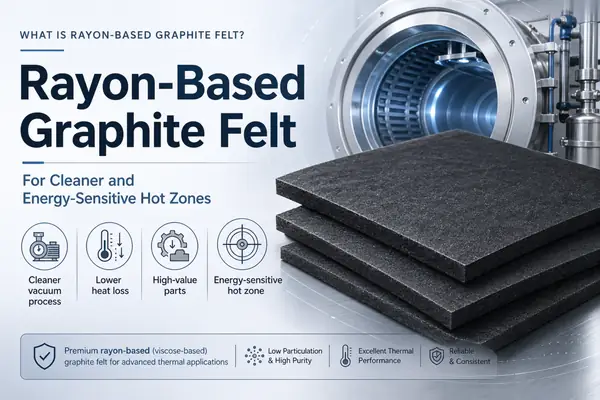
Typical advantages of rayon-based graphite felt include:
- Often selected for cleaner vacuum furnace applications
- Often considered where lower heat loss is important
- Suitable for high-value parts and contamination-sensitive processes
- Useful when long-term operating cost is more important than initial material cost
- Commonly evaluated for high-purity and energy-sensitive hot zones
Rayon graphite felt is usually more expensive than PAN graphite felt, but the higher initial cost may be justified when the furnace process requires cleaner conditions, improved insulation efficiency or reduced long-term energy loss.
PAN vs Rayon Graphite Felt: Key Differences

The comparison between PAN and rayon graphite felt should not be reduced to a simple question of which one is "better". A more useful question is: which graphite felt is better suited to your furnace operating conditions?
|
Selection Factor |
PAN-Based Graphite Felt |
Rayon-Based / Viscose-Based Graphite Felt |
|
Material cost |
Usually more economical |
Usually higher initial cost |
|
Thermal insulation |
Suitable for many general furnace applications |
Often preferred when lower heat loss is important |
|
Purity requirement |
Depends on grade and purification level |
Often selected for cleaner vacuum processes |
|
Vacuum performance |
Suitable for standard vacuum or inert atmosphere furnaces |
Often evaluated for cleaner, higher-value vacuum applications |
|
Moisture behaviour |
Requires proper storage, drying and furnace conditioning |
Often considered where moisture pickup and outgassing are key concerns |
|
Application fit |
General heat treatment, sintering, inert atmosphere insulation and routine maintenance |
Titanium, aerospace alloys, high-purity parts, energy-sensitive and contamination-sensitive processes |
|
Purchasing logic |
Best when cost and practical replacement are important |
Best when process cleanliness, energy efficiency or part value justify the cost |
Thermal Efficiency: Why Rayon Graphite Felt Is Often Discussed
One reason rayon graphite felt receives attention in vacuum furnace applications is thermal efficiency. In a published comparison by Thermal Processing, a rayon felt hot zone was reported to be approximately 12.8% more efficient than a PAN felt hot zone under one specific furnace test condition.
This does not mean rayon graphite felt is automatically the best material for every furnace. The result should be understood as a useful third-party reference under specific conditions. Real performance still depends on furnace size, hot zone design, insulation thickness, working temperature, cycle frequency, vacuum level and maintenance condition.
For customers with high energy costs, long holding times or continuous furnace operation, the difference in heat loss can become important. In these cases, comparing the initial material price alone is not enough. The buyer should also consider total operating cost, including power consumption, cycle time, maintenance labour, replacement interval and production downtime.

Vacuum Behaviour, Moisture Pickup and Contamination Risk
For vacuum furnace insulation, thermal performance is only one part of the decision. Customers also need to consider pump-down time, residual gas, moisture pickup, outgassing behaviour and contamination risk.
Graphite felt has a fibre structure and surface area that can absorb or retain air and moisture if it is not properly stored, dried or conditioned. During furnace operation, retained moisture can affect the vacuum environment and may contribute to reactions that influence sensitive workloads.
A technical article from Solar Atmospheres discusses how graphite insulated hot zones, moisture behaviour and contamination concerns can affect certain vacuum furnace applications. The article also notes that rayon felt can offer cleaner and less moisture-absorbing behaviour than PAN felt in their studies.
For common heat treatment applications, PAN-based graphite felt may be a practical and cost-effective choice. For processes involving titanium, aerospace alloys, high-value parts, medical components, semiconductor-related materials or other contamination-sensitive workloads, customers should pay more attention to purity, moisture behaviour and vacuum cleanliness.
How to Choose Between PAN and Rayon Graphite Felt
The best way to select graphite felt insulation is to start from the furnace process, not from the material name. The following guide can help buyers make a more practical decision.

Choose PAN-Based Graphite Felt When:
The project is cost-sensitive.
The furnace is used for general heat treatment or inert atmosphere processing.
The process is not extremely sensitive to trace contamination.
The customer needs routine insulation replacement.
The main requirement is stable high-temperature insulation at a practical cost.
The furnace does not require ultra-clean vacuum performance.
Choose Rayon-Based Graphite Felt When:
Energy efficiency is a major concern.
The process requires cleaner vacuum conditions.
The workload is sensitive to oxygen, moisture or carbon-related contamination.
The furnace handles titanium, aerospace alloys, high-value metals or precision parts.
The customer wants to reduce long-term heat loss rather than only reduce initial purchase cost.
The application requires higher-performance hot zone insulation.
Soft Graphite Felt, Rigid Graphite Felt or Hybrid Insulation?
When comparing PAN vs rayon graphite felt, customers should also consider whether the furnace requires soft graphite felt, rigid graphite felt or a hybrid insulation structure.
Soft graphite felt is flexible and suitable for wrapping, lining, filling and layered insulation. It is often supplied in rolls, sheets or custom-cut pieces. Rigid graphite felt is processed into a self-supporting insulation board or shaped component. It is useful when the hot zone requires better dimensional stability, easier installation, improved handling and machined shapes such as boards, cylinders, rings or insulation panels.
In some furnace designs, a hybrid structure may be used. For example, soft graphite felt can provide flexible thermal insulation, while rigid graphite felt or graphite board can improve shape stability and installation accuracy. Surface treatments, graphite foil lamination, carbon cloth lamination or protective facing can also be considered depending on furnace design.
SHJ CARBON supplies graphite felt and carbon felt insulation materials for vacuum heat-treatment furnaces, graphitisation units, sintering systems, induction furnaces and laboratory furnaces. Available options may include PAN-based graphite felt, viscose-based graphite felt, soft felt rolls, rigid graphite felt boards and custom insulation parts.
Decision Matrix: Which Graphite Felt Fits Your Furnace?
|
Furnace Condition |
Recommended Direction |
Reason |
|
General vacuum heat treatment |
PAN-based graphite felt |
Good balance of insulation performance and cost |
|
Cost-sensitive maintenance replacement |
PAN-based graphite felt |
Practical for routine furnace insulation replacement |
|
High-value parts or contamination-sensitive process |
Rayon / viscose-based graphite felt |
Often selected for cleaner vacuum furnace conditions |
|
Long holding time or high energy cost |
Evaluate rayon-based felt or high-performance rigid felt |
Lower heat loss may reduce long-term operating cost |
|
Furnace lining requiring shape stability |
Rigid graphite felt board |
Better structural support and easier installation |
|
Complex furnace geometry |
Custom-cut soft or rigid graphite felt |
Improves fit, reduces installation waste and supports consistent insulation thickness |
Do Not Compare Only the Material Price
For vacuum furnace insulation, the lowest material price does not always mean the lowest total cost. A more complete purchasing decision should include both initial cost and long-term operating cost. Buyers should consider:
- Material price
- Heat loss during operation
- Power consumption
- Vacuum pump-down time
- Potential contamination risk
- Maintenance interval
- Installation labour
- Replacement downtime
- Scrap risk for high-value parts
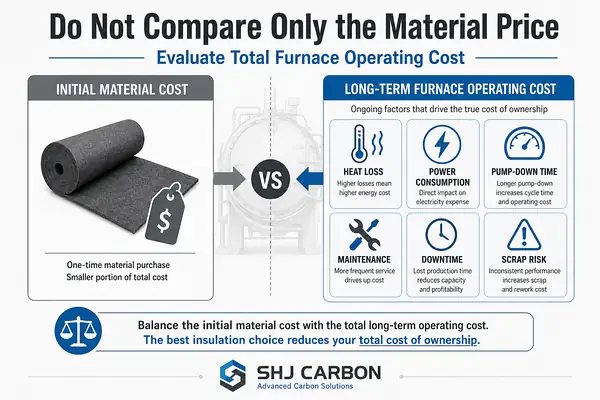
For a low-risk general furnace, PAN-based graphite felt may be the better economic choice. For an energy-sensitive or contamination-sensitive furnace, rayon-based graphite felt may provide better long-term value even if the initial material cost is higher.
What Information Should You Send Before Ordering Graphite Felt?
To recommend the right graphite felt insulation material, SHJ CARBON suggests that customers provide the following information:
- Furnace type and model
- Working temperature and maximum temperature
- Vacuum level or furnace atmosphere
- Hot zone size
- Required insulation thickness
- Current insulation structure
- Workload material
- Purity or ash content requirement
- Cycle frequency and holding time
- Expected replacement interval
- Drawing, photo or sample of the existing insulation part
With this information, SHJ CARBON can help customers evaluate whether PAN-based graphite felt, rayon-based graphite felt, rigid graphite felt board or a custom insulation structure is more suitable for the furnace.
SHJ CARBON's Recommendation
SHJ CARBON recommends selecting graphite felt insulation according to real furnace operating conditions, not only by material name. PAN-based and rayon-based graphite felt both have value, but they serve different purchasing priorities.
If your furnace is used for general vacuum or inert atmosphere heat treatment, PAN-based graphite felt may provide a reliable and economical insulation solution. If your process requires cleaner vacuum conditions, reduced heat loss, better long-term thermal efficiency or lower contamination risk, rayon-based or viscose-based graphite felt should be evaluated carefully.
For customers who are not sure which material to choose, SHJ CARBON can support material selection based on furnace temperature, atmosphere, vacuum level, hot zone size, insulation thickness and application requirements.
Need Help Choosing PAN or Rayon Graphite Felt?
Send SHJ CARBON your furnace temperature, vacuum level, atmosphere, hot zone size and insulation thickness. Our team can help you evaluate the right graphite felt insulation material for your vacuum furnace, inert atmosphere furnace or high-temperature thermal system.
Contact SHJ CARBON for custom graphite felt insulation, rigid graphite felt boards and hot zone insulation solutions.

FAQ: PAN vs Rayon Graphite Felt
Is rayon graphite felt better than PAN graphite felt?
Not always. Rayon graphite felt is often preferred for cleaner and more energy-sensitive vacuum furnace applications, while PAN graphite felt remains practical for many general heat treatment and inert atmosphere furnace applications. The best choice depends on furnace conditions and process requirements.
Is PAN graphite felt suitable for vacuum furnaces?
Yes. PAN-based graphite felt is widely used for high-temperature insulation in vacuum and inert atmosphere furnaces. It is often selected for general heat treatment, sintering and routine furnace insulation replacement.
Why is rayon graphite felt usually more expensive?
Rayon or viscose-based graphite felt usually involves different precursor materials and processing requirements. It is often selected for applications where cleaner vacuum behaviour, lower heat loss or higher-value furnace processing may justify the higher initial material cost.
What is the difference between soft graphite felt and rigid graphite felt?
Soft graphite felt is flexible and suitable for wrapping, lining and filling. Rigid graphite felt is processed into a self-supporting board or shaped insulation part. Rigid felt is often used when dimensional stability, handling strength and accurate installation are important.
What information should I provide before ordering graphite felt?
You should provide working temperature, furnace atmosphere, vacuum level, hot zone size, insulation thickness, required purity, current insulation structure, workload material and expected replacement cycle. Drawings or photos of existing insulation parts are also helpful.
Can SHJ CARBON supply custom graphite felt insulation?
Yes. SHJ CARBON can support soft graphite felt, rigid graphite felt boards, custom-cut insulation parts, shaped boards, cylinders, rings and surface-treated insulation solutions for different furnace designs and high-temperature applications.
Our Recommendation: It Starts With a Conversation
The comparison between PAN vs rayon graphite felt should be based on furnace performance requirements, not only on material price. PAN-based graphite felt is a practical and economical choice for many standard vacuum and inert atmosphere furnaces. Rayon-based graphite felt is often considered for cleaner, more energy-sensitive and contamination-sensitive applications.
For the best result, customers should evaluate graphite felt by working temperature, vacuum level, furnace atmosphere, insulation thickness, hot zone design, part sensitivity and long-term operating cost. SHJ CARBON can help customers select and customise graphite felt insulation materials for vacuum furnaces, heat treatment furnaces and other high-temperature thermal systems.
References:
Thermal Processing: Considerations for Selecting Vacuum Furnace Hot Zone Insulation Materials