Carbon Felt vs Graphite Felt: Key Differences & Applications
Jul 29, 2025
Introduction
In industries like thermal insulation, metallurgy, energy storage, and aerospace, both carbon felt and graphite felt play critical roles thanks to their exceptional thermal and chemical properties. But for engineers, buyers, and project managers alike, a recurring question emerges:
"What's the actual difference between carbon felt and graphite felt-and which one is right for my application?"
Though they may look similar on the surface, these two materials differ significantly in performance, cost, and durability. Choosing the wrong one can lead to reduced efficiency, increased costs, or even failure in high-temperature systems. In this article, we'll break down the key distinctions to help you make an informed decision.
SHJ CARBON's Perspective from Real-World Applications
Over the years, we've worked closely with clients across industries like semiconductor processing, photovoltaics, and high-temperature furnace engineering, where both carbon felt andgraphite feltare essential materials. From insulation in vacuum chambers to electrode layers in energy systems, we've seen firsthand how each material performs under different conditions. These experiences shape our understanding-not just of their technical properties, but of how they behave in actual use. That's why we're sharing this comparison: to help clarify the practical differences between the two, based on what really matters in the field.
What Is Carbon Felt? What Is Graphite Felt?
Carbon felt is a non-woven insulating material made by carbonizing synthetic fibers such as polyacrylonitrile (PAN), viscose, or pitch at high temperatures-typically around 1000°C-in an inert atmosphere. Depending on the process, it can be supplied as soft felt or rigid felt (the latter formed by impregnating the soft version with a binder and then curing it). It's widely used in applications requiring thermal insulation, chemical resistance, or moderate electrical conductivity.
Graphite felt, on the other hand, starts as carbon felt but undergoes an additional graphitization step at temperatures exceeding 2200°C. This high-temperature treatment reorders the carbon atoms into a more crystalline, graphite-like structure. As a result, graphite felt offers higher purity, greater thermal stability, and enhanced conductivity, making it suitable for extreme-temperature environments such as vacuum furnaces and monocrystalline silicon growth systems.

From Carbonization to Graphitization:
Carbon Felt is produced by air-laying carbon short fibers (usually PAN-based), then bonding them via needle punching and heat treating in an inert environment at around 900–1000°C.
Graphite Felt undergoes an additional high-temperature treatment above 2200°C, transforming the microstructure into a more crystalline form with better conductivity and temperature resistance.
In short: graphite felt is the evolved form of carbon felt-more stable, more conductive, and capable of withstanding harsher conditions.
Performance Comparison:
| Property | Carbon Felt | Graphite Felt |
|---|---|---|
| Max Operating Temp. | ~1000°C (inert gas) | Up to 2800°C (non-oxidizing atmosphere) |
| Carbon Purity | 90–95% | >99% |
| Thermal Conductivity | 0.04–0.1 W/m·K | Higher |
| Tensile Strength | 3–7 GPa | Lower, more brittle |
| Chemical Stability | Good | Excellent |
| Cost | Lower | Higher |
Application Scenarios: Which One Fits Your Project?
that's our services
Choose graphite felt for extreme heat and purity needs. Stick with carbon felt when your budget is limited and the thermal requirements are moderate.
| Industry/Application | Recommended Material | Reason |
| Chemical Corrosion Protection | Carbon Felt | Good insulation at lower cost |
| Fuel Cell Electrodes | Carbon or Graphite | Graphite for higher conductivity |
| Monocrystalline Silicon Furnaces | Graphite Felt | Withstands high temperature cycling |
| High-Purity Chemical Filtration | Graphite Felt | Ultra-low ash, consistent structure |
| Thermal Linings in High-Temp Furnaces | Graphite Felt | Stable beyond 2000℃ |

Chemical Corrosion Protection
In environments involving corrosive gases or liquids-such as chemical processing equipment-carbon felt is often the more practical choice. It offers good thermal insulation while keeping material costs under control, especially when extreme purity or ultra-high temperatures are not required.
Fuel Cell Electrodes
Both materials are used as electrode substrates in redox flow and fuel cell systems. While carbon felt is suitable for basic conductivity needs, graphite felt is preferred when higher electrical conductivity or long-term stability is required, particularly in high-power applications.

Monocrystalline Silicon Furnaces
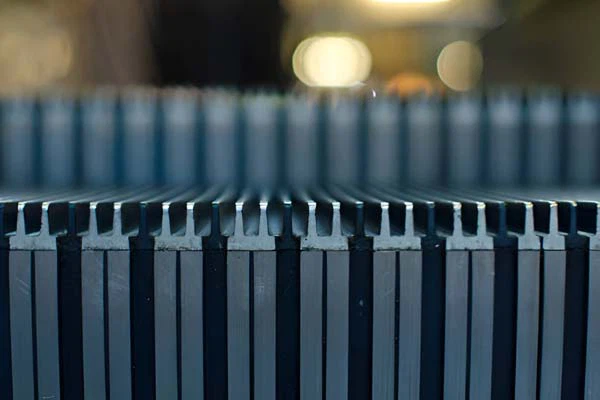
For insulation inside Czochralski (CZ) crystal growth furnaces, graphite felt is the go-to material. It can endure high-temperature cycling and vacuum conditions without structural degradation, ensuring a stable thermal environment for silicon ingot production.
High-Purity Chemical Filtration
When dealing with ultra-pure chemical filtration, such as in semiconductor or pharmaceutical environments, graphite felt stands out. Its low ash content, high carbon purity, and consistent structure minimize contamination and ensure reliability.


Thermal Linings in High-Temperature Furnaces
For vacuum or inert-gas furnaces operating above 2000°C, only graphite felt provides the necessary thermal stability and longevity. It retains shape and performance where other materials would degrade.
A Brief History of Carbon Fiber
Understanding the origin of these materials offers valuable context:
1879: Edison used cellulose fibers like bamboo and cotton to produce the first carbon fibers.
1950s: The U.S. Air Force used viscose-based carbon fibers for rocket nose cones.
1961: Japanese scientist Akio Kondo developed PAN-based carbon fiber, later commercialized by Toray.
1970s–2000s: Applications expanded from aerospace to golf clubs, fishing rods, and industrial insulation.
Today: Carbon and graphite felts are at the core of modern energy systems, electronics, and high-temperature engineering.
Final Thoughts: SHJ CARBON's Recommendation
When it comes to selecting between carbon felt and graphite felt, there is no one-size-fits-all answer. The best material depends on your temperature range, chemical environment, budget, and performance expectations. At SHJ CARBON, we offer:
- Customizable solutions in soft and rigid formats
- Wide material bases (PAN, viscose, pitch)
- High-density and ultra-pure options
- Technical guidance and samples on request
Need help choosing the right felt for your application? Contact SHJ CARBON today and let our engineers assist you with expert insights and tailored recommendations.