Understanding Carbon-Carbon Composites: A Practical Guide to 2D, 2.5D and 3D Architectures
Sep 01, 2025
Introduction
If you work with high-temperature industrial processes, you've likely encountered carbon-carbon composites. These remarkable materials maintain their strength and stability at temperatures that would make most other materials fail. But when engineers first explore these composites, they often encounter confusing terminology - particularly the concepts of 2D, 2.5D and 3D structures.
Let's clear up the confusion. These terms describe how carbon fibers are arranged within the material, and this arrangement directly impacts how the composite will perform in your application. Understanding these differences is crucial for selecting the right material for your specific needs.

What Are Carbon-Carbon Composites?
Imagine a material that's entirely made of carbon, but engineered at the microscopic level for exceptional performance. Carbon-carbon composites combine carbon fibers (for strength) with a carbon matrix (for stability). This combination creates materials that excel where others fail:
- They maintain strength at temperatures exceeding 2000°C
- They resist thermal shock extremely well
- They have excellent wear resistance
- They won't melt or soften under extreme heat
These properties make them invaluable for aerospace, industrial heating, and specialized manufacturing applications.
Understanding the Architectures
2D Structures: The Layered Approach
Picture a stack of carbon fabric sheets, each layer oriented in specific directions, then bonded together. This is the essence of 2D architecture. The fibers primarily run in two directions (X and Y axes), creating a material that's very strong in those directions but less strong through the thickness.

You'll typically find 2D composites in applications where:
- Loads are primarily in one plane
- Cost-effectiveness is important
- Extreme thermal cycling isn't expected
Common examples include heat treatment fixtures, radiation shields, and support plates.
2.5D Structures: The Balanced Performer
essentially what 2.5D architecture does - it maintains the in-plane strength of 2D while adding crucial through-thickness reinforcement.
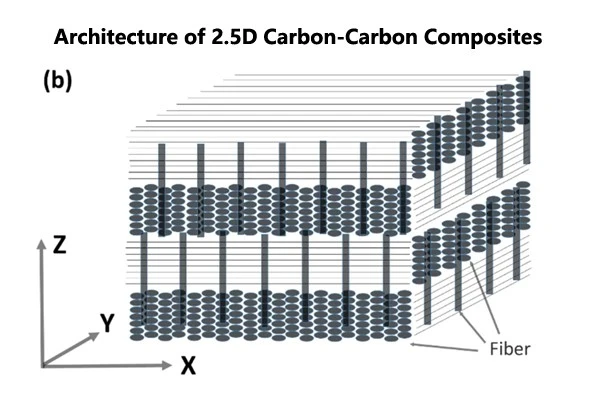
This architecture has become the workhorse for many industrial applications because it offers:
- Excellent balance of in-plane and through-thickness properties
- Good resistance to delamination
- Better thermal cycling performance than 2D
- Cost-effectiveness for most applications
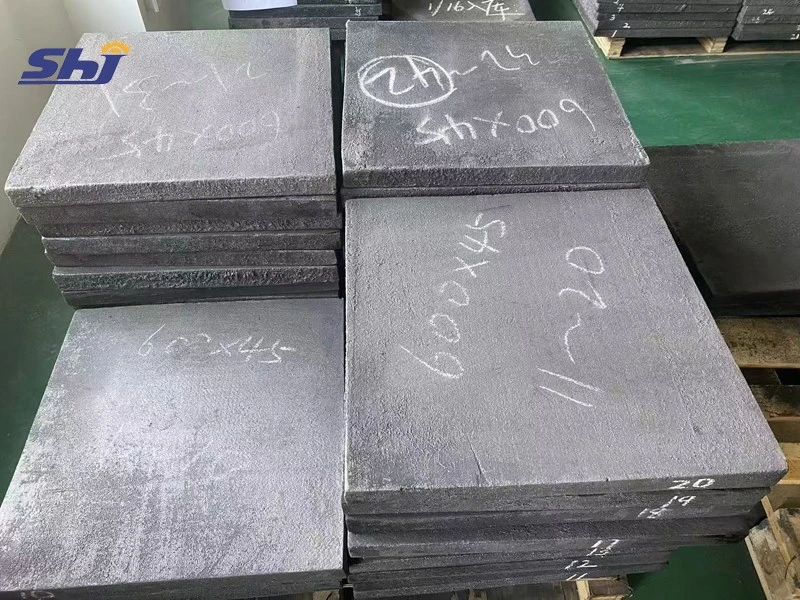
You'll find 2.5D composites in:
- Furnace racks and fixtures
- Fasteners and connection components
- Glass processing equipment
- Aerospace braking systems
3D Structures: The Maximum Performance Option
For the most demanding applications, 3D architectures provide continuous fiber reinforcement in all three directions. While offering excellent properties in every direction, these composites are less common in industrial applications due to their higher cost and specialized manufacturing requirements.
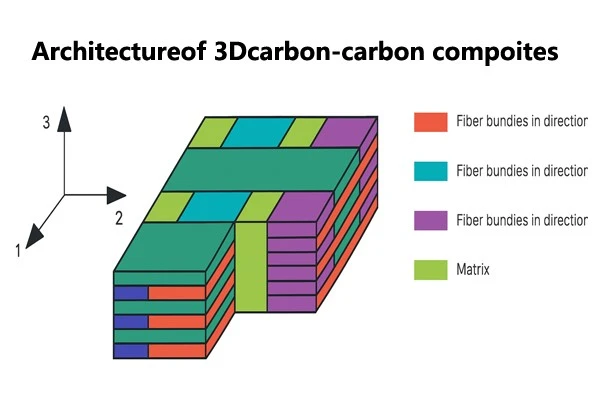
A Quick Comparison
|
Feature |
2D Composite |
2.5D Composite |
3D Composite |
|
Strength Direction |
Mainly in-plane |
In-plane + some Z-direction |
Balanced in all directions |
|
Delamination Resistance |
Low |
Medium to High |
Very High |
|
Cost |
Lowest |
Medium |
Highest |
|
Best For |
Planar applications, static loads |
Cyclic thermal loads, industrial brakes |
Extreme mechanical & thermal shock |
How to Choice the suitable carbon-carbon composite ?
Selecting the right architecture involves more than just comparing specifications. You need to consider:
Your Operating Environment
What temperatures will the component experience? How rapid are the heating and cooling cycles? What atmosphere will it operate in (oxidizing, reducing, inert)?
Mechanical Requirements
What loads will the component experience? In which directions? Are there impact or vibration considerations?
Performance Expectations
How long should the component last? What maintenance intervals are acceptable? What are your contamination concerns?
Practical Examples from Industry
Consider heat treatment applications. A loading rack for aluminum processing must withstand thermal cycling, mechanical loading, and sometimes corrosive environments. While 2D composites might seem sufficient initially, many engineers find that 2.5D architectures provide better longevity and reliability despite the slightly higher initial cost.
In aerospace braking, consistent performance is non-negotiable. The right composite must provide stable friction characteristics while managing extreme thermal and mechanical stresses. Here, the specific formulation and architecture make all the difference in safety and performance.
Implementation Considerations
Success with carbon-carbon composites involves more than just material selection. You'll want to consider:
- How components will be joined and installed
- Thermal expansion characteristics in your system
- Maintenance and inspection requirements
- Total cost of ownership, not just initial cost
Moving Forward
The world of carbon-carbon composites offers incredible opportunities for improving high-temperature processes. While the terminology might seem complex at first, understanding these basic architectural concepts provides a solid foundation for making informed decisions.
Remember that the best results come from matching the material's capabilities to your specific application requirements. Sometimes the optimal solution might involve customizing standard materials or combining different approaches.
As you consider these materials for your applications, focus on understanding your operational requirements first. Then work with experienced partners who can help translate those requirements into material specifications that will deliver the performance and reliability you need.
Whether you're designing new equipment or improving existing processes, carbon-carbon composites offer solutions that can withstand the most challenging environments while providing long-term reliability and performance.