How Does Molded Graphite Balance Performance and Cost?
Nov 18, 2026
By SHJ CARBON Technical Team | Graphite Materials & Application Solutions
Introduction
Two graphite blocks can have the same dimensions, look nearly identical, and still cost very different amounts. If you're buying molded graphite for the first time, what makes one block worth more than another?
Before comparing grades or prices, we would ask what you need the graphite to do. A mold used to make diamond-tool segments must withstand pressing and repeated heating. A vacuum furnace heater must provide the required electrical resistance, while a support block must carry its load at the operating temperature. The material requirements can be quite different, even when the components look similar.
In this article, molded graphite means die-molded synthetic graphite. A mixture of carbon particles and binder is pressed along one axis in a rigid die, then baked and graphitized. Many grades combine useful strength and machinability with relatively economical production, particularly for compact industrial parts. But a drawing and a grade name are not enough to decide what to buy. The manufacturing process is a good place to start, because it affects both the properties and the stock sizes you can choose from.
In This Article
1. Why Do Different Types of Graphite Cost More or Less?
Four common graphite forming methods
Most machined synthetic graphite starts with coke particles and a binder. The mixture is shaped, baked, and eventually graphitized. The four common forming methods differ in how they compact the mixture. This affects particle orientation as well as the sizes and shapes the forming equipment can produce. [3][4][8]
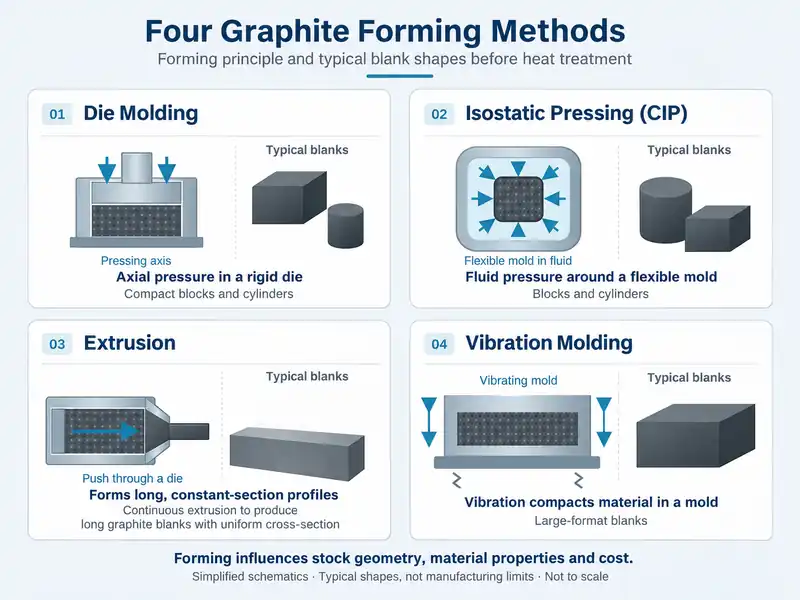
Figure 02 | Four ways of forming a graphite blank before heat treatment.
|
Forming route
|
How it works / why it matters
|
|
Die molding
|
A rigid die and axial pressure compact the mix. Die size and press force limit blank formats; fixed tooling can suit repeat runs.
|
|
Isostatic pressing
|
Fluid pressure surrounds a flexible mold. Pressure from all sides helps reduce directional differences; high-pressure equipment and powder preparation add manufacturing demands.
|
|
Extrusion
|
A mix passes through a die opening. Long, constant-section blanks are practical; extrusion creates preferred orientation.
|
|
Vibration molding
|
Vibration compacts mix in a mold, allowing large formats. Loading and compaction must be controlled across the blank.
|
How forming methods affect properties, sizes and cost
A die-molding press must apply enough force over the entire area being pressed. Double that area at the same pressure and the required force doubles. A larger blank may therefore need a bigger press and a different die. Using established tooling for standard sizes helps keep costs down. Isostatic pressing requires a high-pressure vessel and a flexible mold; some grades also require more demanding fine-powder preparation. In return, the material generally has more uniform properties in different directions.
Extrusion works well for long blanks with a constant cross section. Vibration molding allows large quantities of material to be compacted in a wide mold. For beams or plates, either route can be economical when the stock is close to the required dimensions. Conventional molded graphite can cost less than a comparable isostatic grade, but special tooling, unusual dimensions, and additional processing can change the price. [3][4][8]
Forming equipment explains only part of the cost. In one published industry example, the forming step takes just a day, while the furnace operations take months. The table below describes needle-coke-based synthetic graphite made by cold isostatic pressing (CIP) or extrusion, using industry data from 2018. [1]
|
Stage
|
Published example
|
Why it takes time
|
|
Grinding / mixing
|
4 days
|
Particle sizing and uniform binder distribution
|
|
CIP or extrusion
|
1 day
|
Tool setup, loading and shaping
|
|
Baking
|
28–42 days
|
Controlled heating/cooling, binder carbonization
|
|
Impregnation + rebaking
|
28 days
|
Additional pitch treatment and furnace cycle
|
|
Graphitization
|
35 days
|
High-temperature furnace and cooling
|
|
Finishing / optional treatment
|
6–10 days
|
Machining and applicable additional treatment
|

Figure 03 | Example production timeline, including an impregnation/rebaking cycle. Source: industry report, p. 19 [1].
The listed steps add up to 102–120 days (roughly three to four months), excluding any waiting time not shown in the report. During baking, the binder carbonizes; controlling heating and cooling helps limit defects as volatiles escape. In this example, baking takes place at 850–1,200 °C (1,562–2,192 °F), and graphitization at 2,800–3,000 °C (5,072–5,432 °F). Furnaces, electricity, and cooling all add to the cost. A separate published isostatic process lists about a month for baking and two for graphitization. [1][2] Neither example establishes a die-molding schedule or an order lead time. If a supplier already has the right graphitized blank in stock, there may be no need to wait for a new material batch.
Some of that extra production time can be worth paying for. Pitch impregnation followed by rebaking deposits additional carbon in accessible pores. Purification serves a different purpose: reducing impurities. One published molded graphite specification lists typical ash contents of 500 ppm before purification and 50 ppm afterward. [5] That may matter if the graphite contacts a contamination-sensitive product, but an ordinary fixture without the same purity requirement may not need the added treatment. To know which processing steps are worth the cost, look at the properties your application requires.
2. What Makes Molded Graphite Different?
Grain size, density and porosity
If a mold must reproduce a narrow groove or a fine detail, grain size becomes important. During machining, individual filler particles can pull out of the graphite, leaving pits or chipped edges. Smaller particles in a suitable fine-grained grade generally leave smaller individual defects, making fine features easier to machine. A thick furnace fixture with simple geometry may not need such a fine grain size. Tool condition, porosity, and strength matter too; there is no universal minimum feature size for a given grain size. For more on the relationship between particle size and machining, see our guide to fine-grained graphite.
A smooth surface does not necessarily mean that a material has low permeability. Bulk density is the mass divided by the outside volume, including pores. Two graphite grades with similar densities can have different pore sizes and connectivity. Open pores connect to the outside surface; closed pores do not. For a crucible or a casting mold, the connected pore network, permeability, wetting behavior, and chemical compatibility with the melt may matter more than a small difference in density. Our overview of graphite microstructure explains these structural differences in more detail.
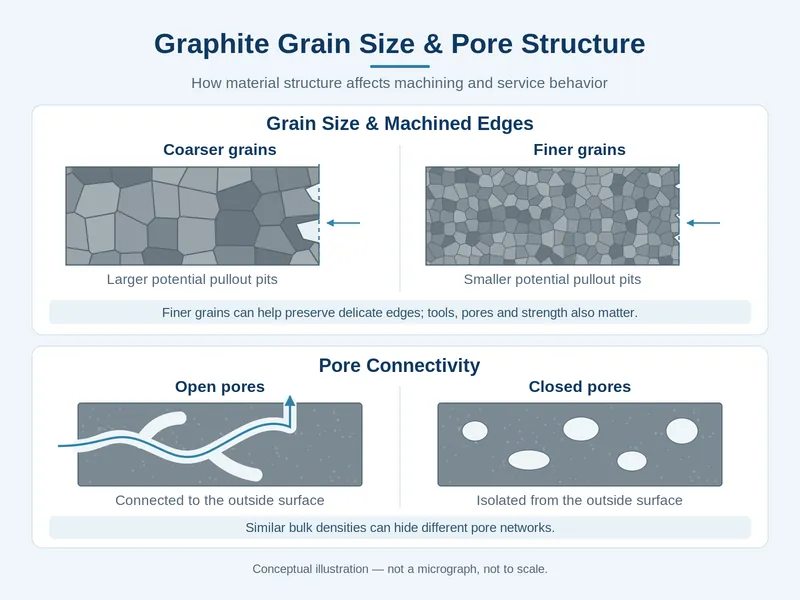
Figure 04 | Grain size and pore structure: independent features.
Mechanical strength and machinability
A high compressive strength tells you how well a material resists crushing under a compressive load; it does not tell you how much bending a component can withstand. A solid block in a press may be loaded mainly in compression, whereas a supported beam carrying a load develops tensile stress on one side as it bends. Graphite is brittle, so a grade with high compressive strength may still fracture in bending. Flexural strength helps in screening grades, but section thickness, support span, load, and local stress concentrations determine the actual stresses. Catalog strength values are not allowable design stresses.
Why pressing direction matters
Before cutting a load-bearing part from molded graphite, we would check the orientation of the original pressing axis. Particles may align preferentially during die molding, so test specimens cut parallel and perpendicular to the axis can give different results. This is called anisotropy. It can affect mechanical strength, electrical resistivity, and thermal expansion. Ask how the specimens were cut and how the finished part will be oriented in the blank; the forming process alone does not tell you which direction is stronger. [3]
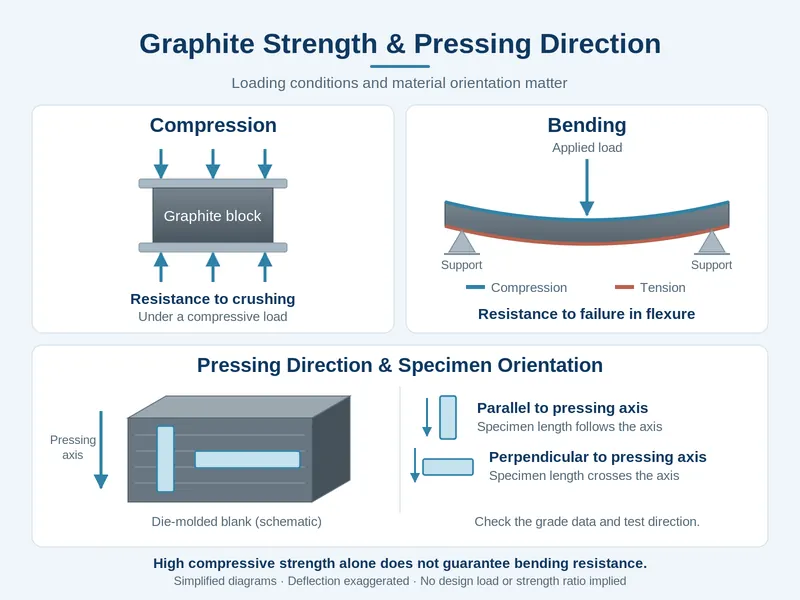
Figure 05 | Compression, bending and orientation: simplified diagrams.
Other properties become more important in different applications. A furnace heater needs the right resistance at its operating temperature, so resistivity, length, and cross section must be considered together. In a heated mold, thermal conductivity affects how heat spreads, while thermal expansion affects clearances. Components near semiconductor or crystal-growth materials may need limits on specific impurities rather than just total ash. The grade data matter more than the forming method alone.
3. Molded Graphite and Other Forming Routes: What Are the Trade-Offs?
When the service requirements are known, the forming route helps narrow the options. Isostatic graphite is worth evaluating when properties must be similar in different directions. For a compact part, molded graphite is a practical candidate if its strength, machinability, and directional properties meet the requirements. For larger components, stock size alone can eliminate some options. The dimensions below are examples from published catalogs, not maximum production sizes or confirmed stock. [5][6][10]
|
Type
|
Published size example (mm)
|
What sets it apart / what to check
|
|
Die-molded
|
550 × 410 × 250; 910 × 310 × 310 [5]
|
Compact fine-grain blanks; check pressing direction and usable dimensions.
|
|
Isostatic
|
1200 × 640 × 270; 1600 × 670 × 300 [6]
|
Uniform directional behavior is often a priority; compare grade and price.
|
|
Extruded
|
500 × 500 × 2750 [10]
|
Long profiles; check the longitudinal/transverse data and cross section.
|
|
Vibration-molded
|
610 × 720 × 2700 [10]
|
Large formats; check thickness, grain size and load direction.
|
Strength, uniformity and machining quality
Rather than rank graphite types by quality, compare actual grades. These four commercial grades from a published material catalog show the scale of the differences and where properties overlap. [12] They are examples, not specifications for every grade made by each forming method.
|
Route / grade
|
Grain size
(µm) |
Density
(g/cm³) |
Flexural
(MPa) |
Compressive
(MPa) |
Resistivity
(µΩ·m) |
|
Die-molded M2
|
43
|
1.85
|
35–45
|
60–82
|
≤12
|
|
Isostatic IFS-2
|
25
|
1.85
|
40
|
80
|
11–13
|
|
Extruded EGK 1
|
800 (max.)
|
1.78
|
19
|
47
|
≤7
|
|
Vibration VSK-1
|
800
|
1.72
|
13.5
|
30
|
8.5
|
Source [12], published catalog entries. Grain size converted from mm where necessary (1 mm = 1,000 µm). Only EGK 1 explicitly specifies maximum grain size; the other entries do not define the statistic. Test directions and conditions are not fully disclosed. Treat values as screening examples, not directly comparable acceptance limits.
The molded graphite grade M2 and the isostatic grade IFS-2 have the same listed bulk density. Their published flexural and compressive strength values overlap too. The listed grain sizes differ, although the grain-size statistics are not defined consistently. EGK 1 has a lower published resistivity limit, which may be useful in some electrical designs; lower resistivity is not universally better. Compare actual grades using the same grain-size definition, sampling direction, and test method wherever possible. These catalog entries do not establish that one grade can replace another.
Available sizes and material utilization
A 1,500 mm (59.1 in) furnace support that must be made in one piece cannot be cut from either molded graphite blank in the table. The 1,600 mm isostatic blank, 2,750 mm extruded blank, or a suitable vibration-molded blank could provide the required length. Check the usable dimensions after trimming and machining, however, and verify the load and temperature requirements. A compact locating block in the same furnace may make better use of a smaller die-molded blank.
When higher material costs are justified
If you need very similar expansion in several directions, a fine machining feature, or a verified impurity limit, paying more for the right grade can be justified. If molded graphite already meets those requirements, keep it on the shortlist. Our material comparison guide and the available molded graphite grades and sizes provide a starting point for checking specific options. Obtain the necessary approval and validation before replacing a specified grade. Once the grades and stock sizes are technically suitable, you can compare the actual cost of supplying the part.
4. What Determines the Cost of Molded Graphite Parts?
Raw material price and finished part cost
Make sure the quotations cover the same thing. You may need an entire block, a cut blank, or a finished and inspected component. Even for the same grade, one supplier may have a suitable blank in stock, while another must cut from a much larger block or order a production lot. Offcuts from standard grades can often be used on other orders; unusual grades or sizes may tie up inventory. Material allocation, setup, cutting, machining, inspection, and rejected pieces all affect the price. For cut blanks and finished parts, price per kilogram is only part of the cost.
Stock size, machining allowance and material waste
To see the effect of size alone, take a 100 × 60 × 20 mm rectangular part (about 3.94 × 2.36 × 0.79 in). Assume that two candidate grades have already met its service and machining requirements. Each supplier uses one blank per part, with no offcut reuse. This is an illustrative calculation, not a customer quotation.
|
Item
|
Blank A
|
Blank B
|
|
Stock (mm)
|
110 × 70 × 25
|
150 × 100 × 25
|
|
Blank volume
|
192.5 cm³
|
375 cm³
|
|
Finished volume
|
120 cm³
|
120 cm³
|
|
Geometric utilization
|
62.3%
|
32.0%
|
|
Volume removed
|
72.5 cm³
|
255 cm³
|
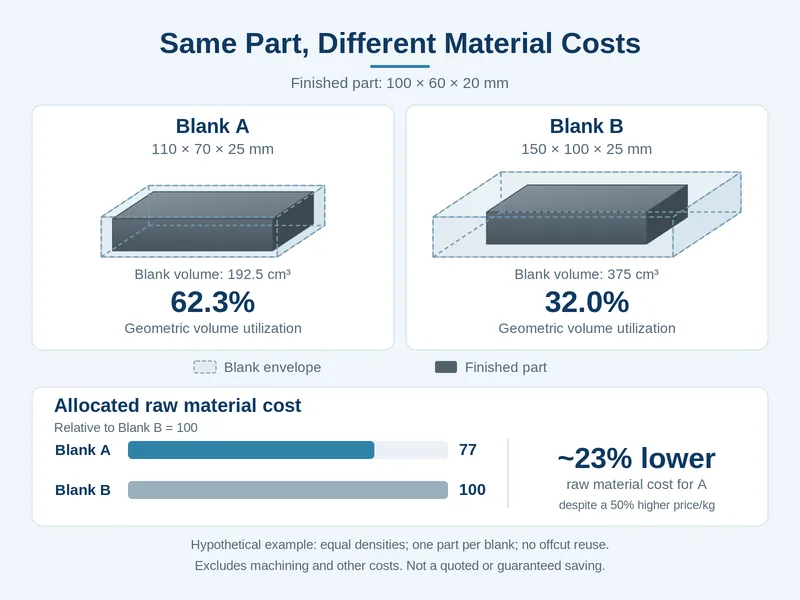
Figure 06 | Same finished component, different starting volumes (hypothetical example).
With equal densities, blank A uses only 51.3% as much material by weight and volume as blank B. Even if A costs 50% more per kilogram, the allocated raw material cost is about 23% lower under these assumptions. Conversely, a low-priced molded graphite grade may lose its cost advantage if it is available only in a much larger blank. In a real order, check density, offcut reuse, cutting layouts, machining time, and yield. The cheaper block is not always the cheaper part.
Order quantity and production methods
For a trial or a small order, machining standard stock can avoid dedicated tooling costs. For a large, repeat order of a relatively compact shape, a near-net-shape die-molded preform may reduce the amount of material removed. The savings must offset the cost of tooling, controlling shrinkage, and qualification. This is an option for certain molding processes, not a feature of every molded graphite blank. [3] For repeated orders of long, constant-section blanks, extrusion may offer a different economical route.
Service life and replacement costs
For the end user, a low purchase price can be misleading if the mold wears out or cracks sooner. Compare the cost per acceptable product or usable production cycle under equivalent conditions, taking account of replacement, maintenance, rejects, and downtime where relevant. A machine shop may not have access to those service-life records and should not promise savings from a grade change alone. The applications below show why the right material for one job may not be the best choice for another.
5. Which Type of Graphite Is Right for Your Application?
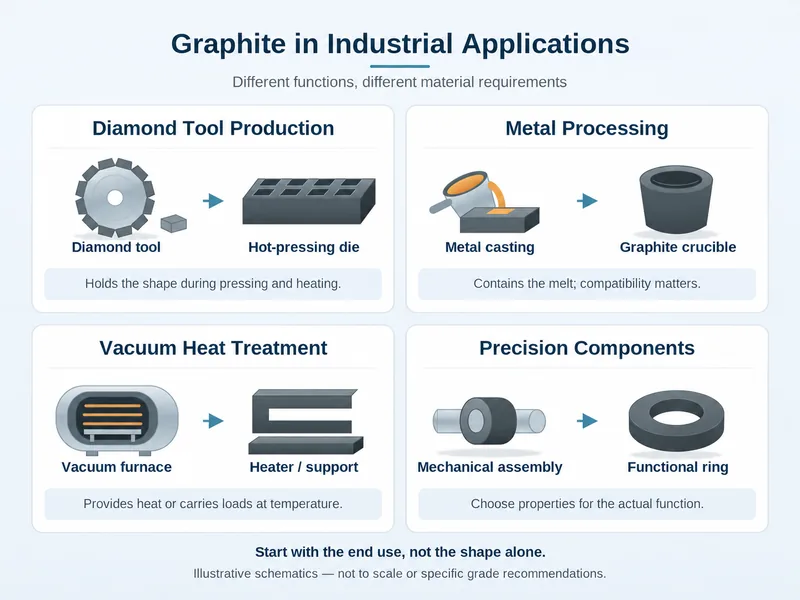
Figure 07 | End-use processes and the graphite components that enable them; illustrative examples.
Producing diamond tools - sintering and hot pressing
When making diamond-tool segments, graphite tooling holds the powder mixture in shape as heat and pressure are applied. We would ask what is being pressed, how many cavities are needed, and how often the tooling is heated and cooled. A compact, thick-walled die is a candidate for conventional molded graphite if the grade meets the required mechanical and thermal properties. Closely spaced cavities are more demanding: thin walls may develop tensile or bending stresses under lateral pressure. Compare suitable fine-grained molded graphite and isostatic grades against the geometry and duty. If an existing mold cracks early, check where the crack starts, the loading, and the thermal gradients before choosing a stronger grade. A change of material may not solve a design or process problem.
Metal processing - casting molds and crucibles
For melting or casting, start with the alloy and the function of the graphite. Is it holding the melt, transferring heat, or forming the cast product? Temperature, contact time, wetting behavior, and chemical compatibility influence the risk of penetration or reaction. A suitable fine-grained molded graphite grade may be useful for detailed cavities, whereas a large, simple mold may be more economical in another stock format. Continuous casting also requires attention to heat transfer and dimensional stability. Check compatibility with the actual melt and process rather than selecting by density alone.
Vacuum heat treatment - heaters, fixtures and supports
A graphite heater and a graphite support in the same vacuum furnace have different jobs. The heater must provide the required resistance and heat distribution; the support must withstand its load over the actual span at temperature. Long beams are candidates for extruded stock, wide trays for vibration-molded or other large blanks, and compact fixtures for suitable molded graphite. Check electrical performance at operating temperature when selecting heater material. Graphite can oxidize at elevated temperatures in oxidizing atmospheres. A temperature rating for vacuum service should not be applied directly to operation in air. [9]
Precision components - function before dimensions
A graphite ring illustrates why shape alone is not a material specification. An electrical ring needs the right resistance; a locating ring may need dimensional stability and load capacity. For a sliding or sealing ring, friction, wear, process fluid, and leakage also matter. Specialized carbon-graphite grades and impregnation treatments may be more appropriate than the ordinary graphite grades discussed here. [3] Once you know the function, check the thinnest wall, narrowest groove, and critical tolerances. Fine-grained molded graphite or isostatic graphite may be worth comparing for delicate features; a simple thick ring may not need the same grain size.
|
End use / graphite function
|
Compare first
|
Check before choosing
|
|
Diamond-tool production / compact mold
|
Molded / isostatic
|
Product, pressure, cavity walls, thermal cycle
|
|
Metal casting / mold or crucible
|
Suitable molded / isostatic / other stock
|
Melt compatibility, temperature, permeability, size
|
|
Furnace / long support
|
Extruded / other long stock
|
Span, temperature, load, direction
|
|
Furnace / broad tray
|
Vibration-molded / other large stock
|
Usable size, load and flatness
|
|
Precision component / fine features
|
Fine-grain molded / isostatic
|
Function, smallest feature, tolerance
|
|
Contamination-sensitive process
|
Any grade meeting the verified limits
|
Specific impurity limits and test evidence
|
6. What Should You Know Before Ordering Graphite?
Application, temperature and working environment
You may know exactly what the graphite needs to do without knowing the grade name. That is enough to begin narrowing down the options. Tell us about the end product or process, the graphite's function, and the conditions it must withstand. If you are replacing a part, its current grade, service life, and failure location may help distinguish a material issue from a process or design problem. If you buy graphite blocks for machining or distribution and the end use is unknown, start with the required material specification and usable stock dimensions. Confirm any proposed substitution with the end user; do not assume the application.
Part dimensions, drawings and performance requirements
|
Information to share
|
How it guides selection
|
|
End product, production process, graphite function
|
Identify the performance requirements that matter.
|
|
Temperature, atmosphere, loads, contact medium
|
Screen strength, thermal, oxidation and compatibility needs.
|
|
Raw stock dimensions or part drawing, critical tolerances
|
Match usable stock, cutting orientation and machining route.
|
|
Current grade, failure history or approved specification
|
Set a baseline; confirm whether substitution is permitted.
|
|
Quantity, repeat schedule, desired delivery
|
Check inventory, lot size, tooling and supply basis.
|
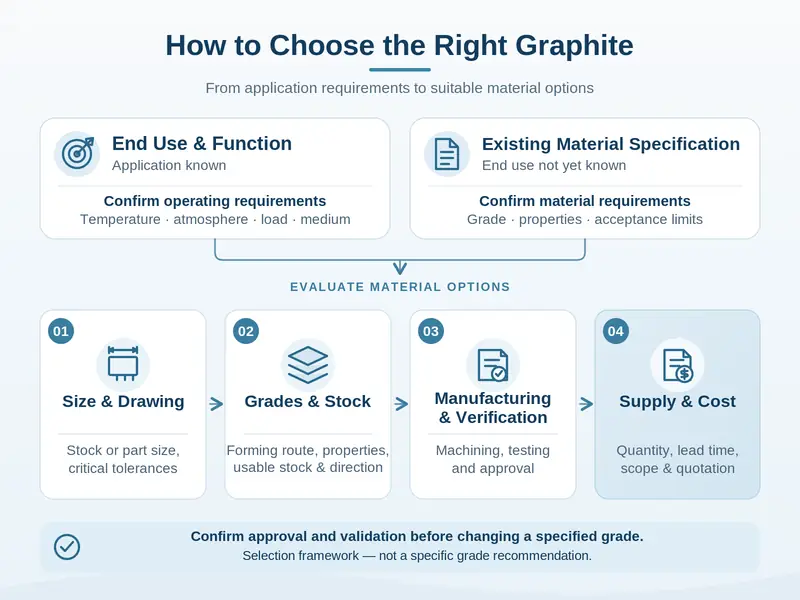
Figure 08 | Material selection from end use and service requirements through grade, usable stock and supply scope.
Comparing material options and quotations
Ask why the proposed grade meets your requirements and what the supplier will deliver. For critical properties, compare test methods, specimen orientation, test temperature, and acceptance limits. For example, ASTM C559 describes a method for measuring bulk density, while ASTM C651 covers four-point flexural-strength testing at room temperature. These are examples of test methods to discuss, not evidence that the catalog grades above were tested to them. A typical catalog value is not a guaranteed value. Agree on necessary inspection, machining trials, or application testing before replacing an approved grade. A quotation should specify the grade, usable dimensions, supply or machining scope, quantity, and delivery terms.
Frequently Asked Questions
Can molded graphite be identified by appearance?
Not reliably. Confirm the forming route and grade from the supplier's documentation.
Can two suppliers use the same grade name for different graphite?
Yes. A commercial grade designation is not necessarily a common industry specification. Check the data sheets, test conditions and acceptance requirements rather than assuming equivalent names mean equivalent material.
Can I buy molded graphite without a finished-part drawing?
Yes. For raw stock, specify the grade or required properties, blank shape, usable dimensions, tolerances and quantity. Share the intended application if known. If the end-use specification is not available, confirm it with the end user before proposing a substitution.
Not Sure Which Graphite Material You Need?
You don't need to settle on a graphite grade before getting in touch. Tell us what the graphite will be used for, what it needs to withstand, and any stock dimensions or drawings you already have. If you're buying raw material, comparing quotations, or replacing an existing grade, let us know what you want to improve. We can discuss the material options, stock sizes, and manufacturing or supply routes with you before you decide.
About the Author
The SHJ CARBON Technical Team focuses on graphite material selection and manufacturing and supply options for industrial applications. Its approach starts with end use and service requirements, then considers grade properties, available stock, and machining requirements.
References
Technical references and published catalog examples used in the article. The numbered sources identify the underlying evidence; catalog dimensions and process times are examples rather than stock commitments or industry averages.
[1] ECGA / Roskill, synthetic graphite process example, p. 19
[2] Toyo Tanso, manufacturing process
[3] SGL Carbon, die-molded carbon and graphite
[4] SGL Carbon, extruded and vibration-molded graphite
[5] SHJ CARBON, molded graphite material page
[6] SHJ CARBON, graphite material comparison (2024)
[8] SGL Carbon, isostatic graphite
[9] ORNL, oxidation behavior and property degradation of graphite