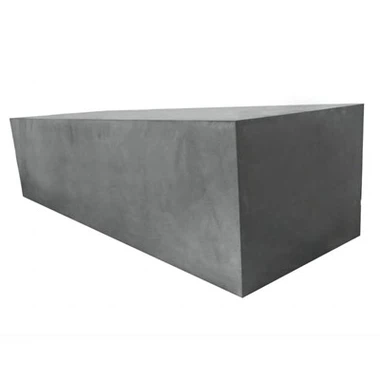
What is Fine-grained Graphite?
Jul 23, 2025
Introduction
SHJ-CARBON understands how essential it is to choose the right type of fine-grained graphite for specific applications. With 25 years of experience in processing, recommending, and supplying graphite solutions, we've built a deep understanding of the material forms and how they can be used to meet industry requirements.
In this article, we'll explore these aliases in detail, highlighting the differences between them and the unique benefits each one offers. Whether you're involved in product development, manufacturing, or sourcing, knowing the nuances of fine-grained graphite can make all the difference in selecting the best material for your needs. With our extensive experience, SHJ-CARBON is ready to provide expert advice and solutions tailored to your project, ensuring you get the best material for optimal performance.
--Writing Background
At SHJ-CARBON, we actively engage in the graphite industry to enhance our technical expertise. Following insights shared by Professor Liu Hongbo at the 2025 6th Semiconductor Carbon Materials Technology Seminar, we've combined his knowledge with our 25 years of experience to provide a deeper understanding of fine-grained graphite. This article reflects our commitment to continuous learning and sharing expertise in the field.
Ⅰ. What is Fine-Grained Graphite?
Fine-grained graphite is a high-density material that stands out for its exceptional properties, including excellent thermal and electrical conductivity, high strength, and stability under extreme conditions. Made from petroleum coke or pitch coke as the base material and coal tar pitch as the binder, fine-grained graphite is manufactured through processes such as mixing, forming, baking and graphitization. This results in a dense structure, typically with a density of ≥ 1.78 g/cm³.

Used in a wide range of industries from energy production to aerospace, fine-grained graphite is chosen for its high-performance capabilities. As a material supplier with over 25 years of experience, SHJ-CARBON is well-versed in fine-grained graphite's applications, processing, and recommendations, offering expert solutions tailored to specific industry needs.

Ⅱ. Common Aliases for Fine-Grained Graphite
Fine-grained graphite may go by several names, depending on its specific manufacturing process, structure, or intended use. Each term reflects a particular characteristic or advantage that makes it suitable for different applications. The most common aliases include:
- High-Performance Graphite: Known for its top-notch thermal and electrical conductivity, ideal for high-demand environments.
- Molded Graphite: Formed using compression molding, offering precision and consistency in its properties.
- Isostatic Graphite: Produced with isostatic pressing, ensuring uniform density and high strength for specialized applications.
- Anisotropic Graphite: Exhibits different properties along different axes, commonly used in applications requiring directional performance.
- High-Purity Graphite: Processed to remove impurities, offering exceptional conductivity and minimal interference in high-tech applications.
- Nuclear Graphite: Designed specifically for use in nuclear reactors, where high stability and low neutron absorption are essential.
- Self-Sintering Graphite: Capable of self-sintering during production, eliminating the need for additional binders.
- Hard Graphite: Known for its exceptional hardness and durability, ideal for industrial applications that demand strength.

Ⅲ . Features of Fine-Grained Graphite
Fine-grained graphite offers several key advantages over regular graphite:

- High Density: Fine-grained graphite has a higher density, resulting in increased durability and strength.
- Enhanced Strength: Its finer grain structure provides superior mechanical strength, improving performance in demanding applications.
- Increased Electrical Resistivity: Compared to standard graphite, fine-grained graphite has higher electrical resistivity, making it suitable for applications requiring controlled conductivity.
- Higher Hardness: Fine-grained graphite is harder, making it more resistant to wear and abrasion.
- Higher Thermal Expansion: It has a higher coefficient of thermal expansion, allowing it to better handle temperature fluctuations.
- Lower Porosity: The fine structure reduces porosity, minimizing gas and moisture absorption and improving performance in high-pressure or vacuum environments.
IV. Challenges in Fine-Grained Graphite Development
1. Overcapacity and Cost Reduction Pressures
-
The development of fine-grained graphite in China began in the early 1960s, driven by military needs. Initially, state-owned enterprises produced molded fine-grained graphite, which later expanded into civilian industries. Over time, the cold isostatic pressing method was introduced for production.
By the end of the 20th century, the industry's production capacity was limited to less than 50,000 tons annually, with product sizes restricted to Φ300mm or 300×300mm, and powder particle sizes typically under 200 mesh (75μm). However, after 2006, the rapid growth of industries like photovoltaics fueled investment, resulting in companies with capacities of up to 30,000 tons annually and products ranging from Φ400mm to Φ1300mm.
Recently, changes in the international market and competition from C/C composite materials have led to overcapacity in the fine-grained graphite industry. Companies are now facing significant pressure to reduce costs and improve efficiency to remain competitive.
-
2. Challenges in Developing High-End (Ultra) Fine-Grained Graphite
-
To meet the rapid growth of the photovoltaic industry, the fine-grained graphite manufacturer has long been focused on developing large-sized products to address key technical issues like cracking. This focus on large-scale products has led to a relative neglect of research and technological development for ultra fine-grained graphite materials.
The increasing use of C/C composite materials in the photovoltaic industry has further pushed the demand for larger C/C thermal fields, squeezing the market share for fine-grained graphite and driving the industry to shift towards ultra fine-grained graphite that cannot be easily replaced by medium and low-density C/C composites.
In recent years, leading domestic companies and new entrants have started to focus more on the development of ultra fine-grained graphite, marking a new development trend. Addressing the theoretical and key technical challenges in the production of high-end graphite materials and achieving domestic substitution has become a consensus and a critical challenge for the industry.
3. Challenges in Improving Consistency of Large-Sized Products
For years, the focus of fine-grained graphite development in China has been on improving properties such as density, strength, electrical and thermal conductivity, and reducing porosity to meet the demands of more advanced applications. While attention has recently shifted towards improving product consistency, there is still no clear understanding of the root causes of inconsistency. Practical solutions to address the performance gaps in domestic products are still lacking.
The main issue with product consistency is the variation in performance within the same piece, as well as between different pieces and batches. Larger products tend to have more pronounced inconsistencies. This directly impacts the product's performance and the level of trust in domestically produced fine-grained graphite. To solve this, it is essential to conduct research to better understand the causes of inconsistency, develop key technologies to improve consistency-especially for larger products-and design specialized equipment to enhance product uniformity. These efforts are crucial for the future of the fine-grained graphite industry.
V. Development of Short-Process Production
Non-Impregnation Densification Technology for Fine-Grained Graphite
-
In domestic production of large-sized isostatic fine-grained graphite, high true-density coke and relatively low green body forming density are typically employed to prevent cracking. While this improves yield, it necessitates 1-2 impregnation-baking cycles to achieve sufficient density and strength, prolonging production time and increasing costs.

-
International Approach: Foreign manufacturers use secondary materials (compressed powder) with higher shrinkage rates during baking for large-sized fine-grained isostatic graphite. This allows achieving high density and mechanical properties with zero or only one impregnation cycle. However, when using high-shrinkage powder for large-sized graphite, the heating rate during primary baking must be appropriately reduced. -
Ultra-Fine vs. Photovoltaic-Grade Graphite: Ultra-fine graphite typically has smaller dimensions, making it suitable for high-shrinkage powder. However, finer particles require more binder pitch, leading to greater shrinkage during baking. Thus, a significantly reduced heating rate is critical. -
Mixing Challenges: Smaller coke particles are harder to mix uniformly with binder pitch. Domestic double-blade kneaders often have "dead zones" with slow material movement. Ensuring complete pitch coating on ultrafine coke particles is a key technical challenge.
Ⅵ. Development of Ultra-Fine Grained Graphite
In recent years, the growing demand for graphite in electric discharge machining (EDM) molds, 3D thermal bending molds, and semiconductor chip processing has led many domestic companies to begin trial production of ultra-fine isostatic graphite. By reducing particle size and improving the mixing process, these companies have significantly enhanced the mechanical properties of isostatic graphite. However, there are still gaps in terms of physical properties, consistency, production scale, and market share compared to similar products in other markets.
Ⅶ. Customization and Differentiated Development
In response to the rapidly evolving market, especially with the rise of third-generation semiconductors such as single crystal silicon carbide (SiC) and gallium nitride (GaN), there is increasing focus on the development of ultra-pure fine-grained graphite. While China has established a foundation in high-purity fine-grained graphite, the industry is still catching up in producing graphite specifically tailored for applications like single crystal SiC.
To drive differentiated development, industries are also looking into carbon-based composite materials, such as carbon/ceramic composites. These materials, which can be produced using isostatic pressing, offer improved properties like enhanced oxidation resistance and wear resistance. This shift in focus opens new opportunities for fine-grained graphite in high-performance applications, including in the growing semiconductor and renewable energy sectors.
Ⅷ. Improving Product Consistency in Production
Several factors affect the consistency of fine-grained graphite, which can be grouped into two main categories:
- Process and Equipment-Related Inconsistency: Variations in production due to non-continuous processes, equipment limitations, binder migration, and heat distribution issues.
- Raw Material and Process Control Variability: Inconsistencies caused by unstable raw material properties, fluctuating particle sizes, and process control challenges.
Ensuring product consistency is crucial for improving the reliability of fine-grained graphite, especially in high-performance applications. Improving manufacturing processes, controlling raw material variability, and enhancing quality assurance systems are key to producing consistent, high-quality products.
Ⅸ. Automation and Clean Production Technologies
As environmental standards continue to tighten, the carbon industry faces increased pressure to reduce emissions and energy consumption. The adoption of automated and intelligent production technologies offers numerous advantages. These technologies not only reduce harmful gas emissions but also lower production costs by reducing labor and energy consumption.
For example, precise control over the heat treatment process using continuous graphitization technology can significantly improve the material's consistency and performance. This shift towards automated, energy-efficient production aligns with both environmental goals and the need for higher-quality fine-grained graphite.
Conclusion:
Fine-grained graphite has emerged as a cornerstone material for advanced industrial applications, combining superior performance with unparalleled versatility. While domestic capabilities in ultrafine-grade production continue to advance, the reality remains that critical high-end formulations still rely on overseas suppliers - particularly for cutting-edge semiconductor and nuclear applications. This dependency underscores an urgent need for focused innovation across the entire value chain, from raw material refinement to precision processing. The path forward demands collaborative efforts to master core technologies while driving sustainable production practices. For industry stakeholders, now is the moment to prioritize strategic R&D partnerships, invest in smart manufacturing infrastructure, and cultivate specialized expertise - because the future of advanced manufacturing will be written, quite literally, in graphite.