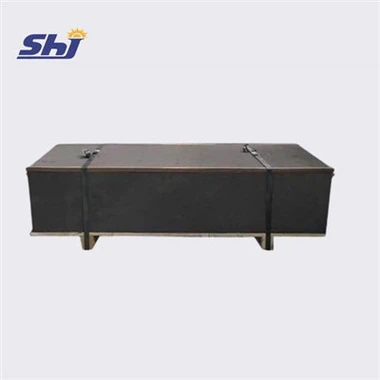
What Is a Graphite Liner?
Nov 25, 2025
Introduction
Many industrial systems run in environments that involve high heat, corrosive chemicals, fast temperature changes, or abrasive materials. In these conditions, equipment needs strong internal protection to stay stable. This is where a graphite liner becomes important.
As a material with unique thermal, chemical, and mechanical advantages, a graphite liner helps protect reactors, vessels, furnaces, tanks, and processing equipment that would otherwise wear out quickly. This guide explains what a graphite liner is, how manufacturers produce it, and why so many industries rely on it for safe and reliable operation.
1. Understanding What a Graphite Liner Is ?
A graphite liner is an internal protective layer made from high-purity graphite. It lines the inside of a tank, reactor, furnace, or mechanical component. Its purpose is simple: guard the equipment from corrosion, heat, abrasion, and chemical attack.
Because graphite maintains stability at extremely high temperatures and resists reactions with most chemicals, it performs well in environments where metals, polymers, and ceramics often fail. When users search for "graphite liner," they often want to understand:
- What it does
- What problems it solves
- Where it is used
- How it compares to other lining materials
This article answers those questions from a materials engineering point of view.
2. How a Graphite Liner Is Manufactured ?
A graphite liner is not a simple block of carbon. It comes from a controlled and technical process designed to give graphite the right density, purity, and mechanical strength.
2.1 Mixing the Raw Materials
Manufacturers start with fine graphite powder. They choose this powder based on purity level and grain size. For industrial-grade liners, purity often reaches 99% or higher. For semiconductor or electronic applications, the purity can reach 99.99%. A binder helps shape the material before heat treatment.
2.2 Forming the Shape
Different forming techniques create different performance levels:
- Isostatic pressing: Pressure comes from all directions. This produces uniform density and excellent strength.
- Molded pressing: Good for large blocks and cost-sensitive applications.
- Extrusion: Useful for long, straight shapes such as tubes and channels.
Each process creates a graphite liner with different grain structures and mechanical properties.

2.3 High-Temperature Treatment
The shaped material goes through a high-temperature baking process. This step improves density, removes volatile components, and increases structural stability. High-temperature treatment also enhances chemical resistance.
2.4 Precision Machining
Finally, CNC machining shapes the liner into its exact final form. At this stage, manufacturers adjust thickness, diameter, channels, and surface finish according to engineering drawings.
This combination of forming, heat treatment, and machining gives the graphite liner its long-lasting durability.

3. Key Properties That Make Graphite Liners Effective
3.1 High-Temperature Resistance
Graphite keeps its strength even above 1000°C. It does not melt or soften. This makes it perfect for furnace linings and high-temperature reactors.
3.2 Strong Chemical Stability
Graphite resists most acids, alkalis, and corrosive gases. Its stability supports chemical processes that involve aggressive media.
3.3 Excellent Wear Resistance
Graphite handles abrasion well. It protects tanks, channels, and moving components from erosion.
3.4 Natural Self-Lubrication
Graphite has low friction. This ability helps reduce wear in mechanical systems, seals, and sliding components.
3.5 Low Thermal Expansion
Graphite expands very little when heated. This helps systems stay dimensionally stable even during fast temperature changes.
3.6 Thermal Conductivity
Graphite spreads heat evenly. In furnace systems or thermal reactors, this helps prevent localized overheating.
3.7 Electrical Conductivity
Certain electrochemical systems rely on graphite's ability to conduct electricity. For these applications, a graphite liner does more than protect-it becomes part of the operating mechanism.
4. Where Graphite Liners Are Used ?
A graphite liner supports many industries because it can resist heat, corrosion, and wear at the same time. Below are the primary fields where it plays a major role.
4.1 Chemical Processing
In chemical plants, equipment faces strong acids, alkalis, organic solvents, and corrosive gases. A graphite liner protects:
- Reaction vessels
- Absorption towers
- Storage tanks
- Pipelines
- Fluid channels
Because graphite does not react with these chemicals, it allows safe long-term operation. This reduces maintenance intervals and prevents contamination.


4.2 Metallurgy and High-Temperature Furnaces
Graphite performs well when exposed to molten metals, high-temperature gases, or electrochemical environments. Common applications include:
- Electrolytic cell linings
- Furnace insulation layers
- Anode and cathode structures
- Protective walls in high-temperature chambers
In these systems, graphite remains dimensionally stable. It resists molten salts and supports uniform heat flow.
4.3 Electronics and Semiconductor Manufacturing
Modern semiconductor production requires extremely pure materials. Even small contamination can cause product failure. Graphite liners support:
- Graphite boats
- Wafer processing trays
- High-temperature carriers
- Furnace liners
The material's purity and thermal stability help maintain a controlled environment during processing.


4.4 Mechanical Components
Mechanical systems use graphite liners for seals, bearings, bushings, and friction surfaces. Key benefits include:
- Lower friction
- Less wear
- Higher equipment reliability
- Longer service life
Graphite performs well even without additional lubrication.
5. Graphite Liner vs. Other Lining Materials
Different industries use ceramics, metal alloys, PTFE, and composites for lining. But graphite brings a combination of advantages that few materials can match:
|
Material |
Heat Resistance |
Chemical Stability |
Wear Resistance |
Key Strength |
|
Graphite |
Excellent |
Excellent |
Strong |
High-temp + corrosion |
|
Metal |
Moderate |
Weak against acids |
Strong |
Structural strength |
|
Ceramic |
High |
Good |
Moderate |
Thermal stability |
|
PTFE |
Low |
Very high |
Weak |
Chemical protection |
Graphite stands out because it handles heat, corrosion, and wear at the same time.
6. How to Choose the Right Graphite Liner

Each application requires different specifications. When choosing a graphite liner, engineers consider:
- Purity level
- Density
- Forming method (isostatic, molded, extruded)
- Operating temperature
- Contact chemicals
- Mechanical load
- Required lifespan
- Machining tolerance
- Surface finish
With the right combination of these factors, a graphite liner can operate reliably for years.
7. Final Thoughts
A graphite liner supports industrial systems that demand stability, safety, and high performance. Its ability to handle extreme heat, corrosive media, fast thermal changes, and abrasive wear makes it one of the most reliable lining materials available today.
For companies that work with chemicals, metals, electronics, or environmental processes, a well-engineered graphite liner can reduce downtime, improve equipment life, and maintain product quality. Understanding how it works and where it fits helps you make informed decisions about materials for your operations.