


Case Study: Replacing Thermal Insulation in MIM Vacuum Furnace
Nov 11, 2025
Introduction
Industrial vacuum furnaces play a central role in the Metal Injection Molding (MIM) industry. Their thermal stability, temperature uniformity, and insulation performance directly influence product density, sintering quality, and surface finish. When the insulation system inside a vacuum furnace ages, even small changes in thermal conductivity or structural integrity can increase power consumption, reduce heating efficiency, and lead to inconsistent sintering results.
At SHJ CARBON, we specialize in graphite and carbon materials solutions for industrial furnaces. Our experience spans over a decade working with sintering, brazing, heat-treatment, HIP, and CVD systems. In this case study, we walk through a real project with a European MIM manufacturer who needed to replace the thermal insulation in a SECO/WARWICK vacuum sintering furnace.
This article provides actionable insight for engineers, maintenance managers, and buyers evaluatinggraphite felt insulation, PAN-based rigid felt, graphite paper, or CFC fixtures for vacuum furnace upgrades.
Why Insulation Condition Matters in Vacuum Furnaces
The insulation layer in a vacuum furnace creates a stable thermal environment. It helps maintain heat uniformity, reduce heat loss, and protect internal components from thermal stress. When the insulation ages, several issues appear:

- Higher energy consumption due to increased heat leakage
- More difficult temperature control and uniformity
- Potential contamination from insulation dust or fiber shedding
- Shortened maintenance cycles and higher operating costs
In MIM sintering, these problems affect density distribution, shrinkage ratios, grain structure, and final product consistency. This is why many plants schedule insulation replacement as part of planned annual or biannual maintenance.
When discussing insulation replacement, engineers often search with terms like:
graphite felt thermal insulation, hard felt insulation, soft felt insulation, graphite insulation board, thermal insulation carbon felt, replacing industrial furnace insulation. These are all relevant to the core solution in this project.
Customer Background
- Region: Europe
- Industry: Metal Injection Molding
- Equipment: SECO/WARWICK vacuum sintering furnace
- Customer need: Replace aging thermal insulation in the hot zone and furnace door


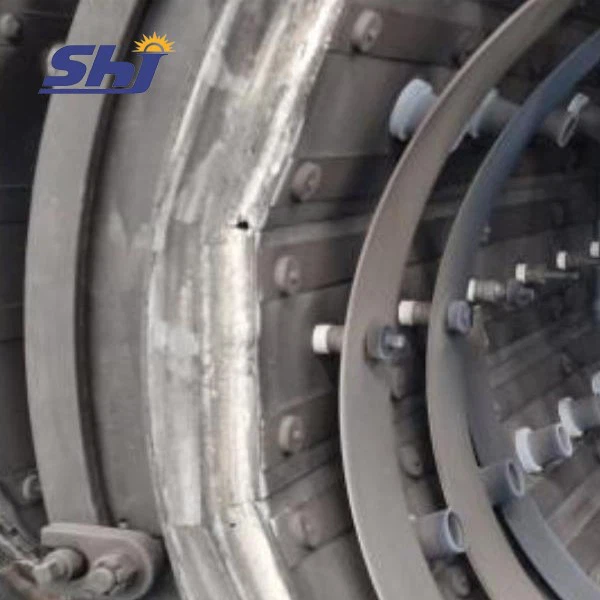
The original insulation started losing thickness and structural stability. The customer also noticed residue particles appearing near the heating elements and work zone. They wanted to restore furnace performance without changing the overall furnace structure.
Because the customer runs continuous production, they needed stable lead times and material selection guidance, not simply a raw material supplier. This is where the one-stop graphite & carbon materials solution matters.
Technical Assessment Process
To recommend the correct insulation materials, we requested key operating details:
- Furnace type and application (vertical or horizontal, heating method, MIM sintering use)
- Maximum operating temperature
- Typical sintering temperature range
- Furnace vacuum level and working atmosphere (inert gas type)
- Power and heating system details
- Original insulation material type, density, and thickness
- Photos of the hot zone and door assembly
This information helped us understand thermal load distribution and where heat stress was most concentrated. During discussions, the customer appreciated that we explain why a specific graphite felt or CFC grade works, not simply list technical numbers. This is a key difference between a supplier and a technical partner.
Performance Optimization and Upgrades
for Vacuum Furnace Systems
If your facility is experiencing heat loss, uneven temperature zones, or increased power consumption in its vacuum furnace, our detailed guide on vacuum furnace insulation upgrades may help you diagnose the issue.
Material Recommendation & Solution Design
Before proposing the insulation replacement materials, our engineering team evaluated the furnace's thermal load distribution, chamber geometry, operating temperature cycles, and expected maintenance intervals. Because different insulation layouts respond differently under long-term high-temperature and vacuum conditions, we do not apply a one-material-fits-all approach.
Recommended Materials Overview
| Model | Material Type | Key Specifications | Function in Furnace System |
| TCR-L16 | PAN-Based Rigid Graphite Felt | 1500 × 1000 × 40 mm, 0.20 g/cm³, 1600°C rating | Main thermal insulation layer in hot zone and furnace door |
| TCF-11 | Graphite Paper / Graphite Foil (Carbon Paper) | 200 × 1400 × 2.5 mm, ≥97% carbon, low sulfur | Surface sealing layer and anti-shedding protection |
| FE-14 | CFC Plates (Carbon Fiber Composite Fixtures) | 40 × 1400 × 2.5 mm, 1.4 g/cm³ | Structural support for insulation and hot zone assembly |
At SHJ CARBON, we work with a full portfolio of graphite and carbon composites, including rigid graphite felt, soft felt layers, graphite foils, and CFC structural components. This allows us to design insulation systems that balance thermal efficiency, mechanical stability, and service life as a complete hot-zone solution rather than isolated parts.
Drawing on our experience in continuous sintering / vacuum heat-treatment environments, we recommended the following layered insulation structure for this furnace, ensuring both performance recovery and long-term durability.
Our latest projects

1. PAN-Based Rigid Graphite Felt
- Size: 1500 × 1000 × 40 mm
- Density: 0.20 g/cm³
- Processing temperature: up to 1600°C
Reasoning:
This PAN-based rigid felt provides dimensional stability, low thermal conductivity, and strong lifecycle durability in vacuum and inert gas atmospheres. It forms the main barrier against heat loss in the hot zone. Compared with soft felt layers, this rigid felt resists sagging over time.

2. Graphite Foil (Carbon Paper)
- Size: 200 × 1400 × 2.5 mm
- Carbon content: ≥ 97%
- Sulfur content: ≤ 1300 ppm
- Density: 1.0 ± 0.5 g/cm³
Function in the insulation system:
- Provides surface sealing
- Reduces particle shedding
- Prevents fiber erosion
- Improves inner chamber cleanliness
Many engineers search terms such as graphite paper, graphite foil insulation, or carbon paper for furnace when looking for this layer.

3. CFC Plates & CFC Strip
- Size: 40 × 1400 × 2.5 mm
- Density: 1.4 g/cm³
Although CFC components represented a smaller portion of this specific order, their role is critical in many furnaces. CFC plates and CFC support structures provide:
- Mechanical structural support
- Resistance to thermal shock
- High flexural strength
Extended service life vs. metal or standard graphite fixtures
Results That Reflect Real Engineering Support
After confirming the sample dimensions and material performance, the customer moved forward with the full replacement. Once installed, the new insulation restored stable heating behavior, lowered energy use, and kept the chamber cleaner during production. The furnace became easier to control during long soak periods, and the sintered parts showed more consistent results across different fixture levels.
This project also reflects why many clients choose to work with us. We don't just ship graphite felt or CFC plates and move on-we help match materials to real operating conditions. With over ten years of experience in vacuum furnace applications, in-house machining for both graphite and carbon composite components, and a stable supply chain that supports ongoing production needs, our focus is simply to make sure the equipment runs reliably and predictably over time.
Conclusion & Consultation Offer
Upgrading insulation in a vacuum furnace is not simply replacing panels. The selection of graphite felt, graphite foil, and CFC support structures affects furnace efficiency, lifespan, and product quality. If you are planning insulation replacement for a vacuum furnace, we can help analyze:
- Operating temperatures
- Atmosphere conditions
- Thermal load
- Fixture support structure
- Hot zone geometry
Send us your furnace model and hot zone photos, and our engineering team will recommend the best combination of PAN-based rigid felt, graphite paper, and CFC components for your application.
Disclaimer:
All product names, trademarks, and brands mentioned in this case study are the property of their respective owners. The reference to a specific vacuum furnace manufacturer is made solely for the purpose of describing real application scenarios and does not imply any partnership, endorsement, authorization, or sponsorship. SHJ CARBON does not represent, sell, or claim official affiliation with the referenced equipment manufacturer. This article is intended for technical discussion and informational purposes only


