Rigid Graphite Felt Boards: Complete Guide to Properties & Applications
Mar 02, 2026
What Are Rigid Graphite Felt Boards?
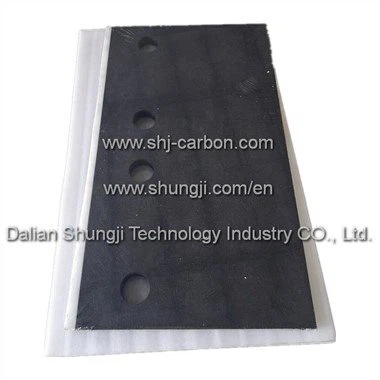
Rigid graphite felt boards are exactly what they sound like. They start as soft carbon felt, then go through high-temperature processing that turns them into rigid boards. The result? A material that insulates like felt but holds its shape like a solid board.
Walk into any facility running furnaces above 2000°C, and you'll find these boards doing critical work. They line hot zones, protect equipment, and keep heat exactly where it needs to be. Without them, those furnaces would waste energy, fail faster, and struggle to maintain the precise temperatures that modern manufacturing demands.
Here's the thing most people don't realize: this material quietly enables some of the most demanding industrial processes on the planet. From vacuum heat treating to crystal growth, it works behind the scenes making the impossible possible.

How Manufacturers Make Rigid Graphite Felt
The process starts with carbon fibers. Manufacturers arrange these fibers into a felt-like structure, then hit them with extreme heat. Really extreme. We're talking 2000°C and above.
That high temperature does two things. First, it converts the carbon into graphite through a process called graphitization. Second, it bonds the fibers together, turning soft felt into a rigid board that keeps its shape while maintaining those insulating properties. Most rigid graphite felts come from three types of precursor materials:
- PAN-based fibers (polyacrylonitrile) produce strong boards with solid mechanical properties. They work well when your application involves vibration or mechanical stress.
- Rayon-based fibers create materials with very low thermal conductivity and high purity. Semiconductor folks love these because they won't contaminate sensitive processes.
- Pitch-based fibers offer a balance. They can deliver higher thermal conductivity when that's what your application needs.
After choosing the fiber, the real magic happens in those high-temperature furnaces. Carbonization around 1000°C burns off non-carbon elements. Graphitization above 2000°C aligns those carbon atoms into the crystalline structure that makes graphite so stable at high temps. A final rigidization step locks everything in place while keeping the material porous enough to insulate effectively.
Long Fiber vs. Short Fiber: What's the Difference?
Not all rigid graphite felts perform the same. The biggest difference comes down to fiber length.
Long fiber rigid graphite felt uses continuous fibers that weave together into an interconnected network. This structure delivers higher mechanical strength and better resistance to thermal shock. When temperatures swing fast, that fiber network absorbs and spreads out the stress. These boards also handle vibration better and resist flaking or shedding particles.
Short fiber molded boards start with chopped fibers mixed with a binder and pressed into shape. This process lets manufacturers create more complex shapes, and it usually costs less. The trade-off? Lower mechanical performance. Short fiber boards typically show lower flexural strength and may not handle repeated heating and cooling as well.

Here's a quick comparison to help you understand the differences:
| Property | Long Fiber Rigid Felt | Short Fiber Molded Board |
|---|---|---|
| Fiber Structure | Continuous network | Chopped fibers with binder |
| Mechanical Strength | Higher | Moderate |
| Thermal Shock Resistance | Excellent | Good |
| Thermal Conductivity | 0.15-0.25 W/m·K | 0.18-0.30 W/m·K |
| Typical Uses | Vacuum furnace hot zones, tough thermal cycles | General insulation, backup layers |
| Surface Shedding | Minimal | Can be higher |
Your choice depends entirely on your application. A vacuum furnace that cycles every day needs the durability of long fiber material. A static insulation job might do perfectly fine with a short fiber board at a lower cost.
Key Performance Numbers: What They Actually Mean
Manufacturers throw a lot of specs at you. Here's what actually matters for your application.
Bulk Density
Bulk density tells you how much material sits in a given volume. For rigid graphite felt, you'll typically see numbers between 0.15 and 0.30 g/cm³.
Higher density usually means higher mechanical strength. But it also means more solid material conducting heat. Lower density gives you better insulation but less structural integrity. The sweet spot depends on whether you need strength or thermal performance.
Thermal Conductivity
This is the big one for insulation applications. Thermal conductivity measures how easily heat flows through the material. Lower numbers mean better insulation.
Good rigid graphite felts deliver thermal conductivity between 0.15 and 0.35 W/m·K. To put that in perspective, it's about 100 times more insulating than solid graphite. At 2000°C, a properly designed insulation system using these materials can maintain a temperature drop of several hundred degrees across just a few inches.
When you look at thermal conductivity specs, pay attention to the test temperature. Some materials perform differently at room temperature versus operating temperature.
Carbon Content and Ash Level
Carbon content tells you how completely the material converted to graphite. Numbers above 99% are standard. Above 99.5% means high purity.
Ash level matters even more. Ash represents the non-carbon impurities left in the material. For most industrial applications, ash below 500 ppm works fine. For semiconductor processing or other clean applications, you want below 100 ppm. Some specialty grades go even lower.
Why does ash matter? At high temperatures, those impurities can vaporize and contaminate your furnace atmosphere or the parts inside. In critical processes like crystal growth or heat treating high-value alloys, that contamination ruins product.
Flexural Strength
Flexural strength measures how much bending stress the material can take before breaking. Higher numbers mean more durable boards that resist damage during installation and thermal cycling.
Typical values range from 1.5 to 5.0 MPa. Long fiber materials sit at the higher end. If your application involves thermal shock, vibration, or mechanical stress, make flexural strength a priority.
Maximum Use Temperature
Manufacturers specify maximum use temperatures for their materials. For rigid graphite felt, this usually falls between 2500°C and 3000°C in inert or vacuum atmospheres.
Note that maximum temperature assumes the right environment. In oxidizing atmospheres, graphite starts degrading at much lower temperatures. Always match the material to your actual operating conditions.
Where Industry Uses Rigid Graphite Felt

Now let's look at where these boards actually do their job.
Vacuum Furnace Hot Zones
Vacuum furnaces for heat treating, brazing, and sintering rely on rigid graphite felt for hot zone insulation. The material lines the furnace interior, keeping heat where it belongs and protecting the water-cooled shell.
Here's why it works so well: low thermal conductivity minimizes heat loss, so the furnace reaches temperature faster and uses less energy. The rigidity means the insulation holds its shape without sagging. And high purity ensures nothing contaminates the workload.
A well-designed graphite felt hot zone can cut energy use by 30% or more compared to older all-metal hot zones.
High-Temperature Metallurgical Furnaces
Steel and non-ferrous metal processors use rigid graphite felt in various furnace types. It serves as backup insulation behind refractory linings, as lightweight furnace covers, and anywhere reducing thermal mass matters.
The lightweight nature of graphite felt compared to traditional refractories means faster heating and cooling cycles. That translates directly to higher productivity.
Crystal Growth and Optical Fiber Drawing
Growing crystals for semiconductors, sapphire for LEDs, or drawing optical fibers requires extremely stable thermal environments. Any temperature fluctuation or contamination degrades the final product.
Rigid graphite felt provides the thermal stability these processes need. Its low thermal mass responds quickly to control changes, while high purity ensures nothing contaminates the growing crystal.
Chemical Vapor Deposition Equipment
CVD furnaces deposit thin films onto substrates under demanding conditions. The process often involves corrosive gases and temperatures that attack most materials.
Rigid graphite felt's chemical inertness makes it ideal here. It doesn't react with process gases, and it maintains its insulating properties even after months in aggressive environments.
Advanced Applications You Should Know About
Beyond traditional uses, rigid graphite felt shows up in some pretty cutting-edge stuff.
Energy Storage Systems
Battery manufacturers now use rigid graphite felt in several ways. In lithium-ion battery packs, thin sheets serve as thermal barriers between cells. If one cell overheats and goes into thermal runaway, the graphite felt slows heat spread to neighboring cells. This can potentially prevent catastrophic pack failure.
Sodium-sulfur batteries, which operate around 300°C, rely on rigid graphite felt for core insulation. The material keeps heat inside where it belongs while letting the outer casing stay cool.
Fuel cell developers use it as a gas diffusion layer. Its porous structure helps distribute reactants while withstanding the fuel cell's operating environment.
Aerospace and Defense
The extreme temperatures in rocket nozzles and missile nose cones demand materials that perform when nothing else will. Rigid graphite felt provides thermal protection here, often as part of composite structures designed to handle both heat and mechanical stress.
Semiconductor Manufacturing Equipment
As semiconductor devices get more complex, the equipment that makes them demands higher purity levels. Ion implanters, etch chambers, and other tools use rigid graphite felt components where high-temperature stability and absolute cleanliness intersect.
How to Pick the Right Rigid Graphite Felt
Choosing the right material doesn't have to be complicated. Follow these steps.
Step 1: Define your thermal needs. What's your max operating temperature? How fast do you heat and cool? Does the material face steady temps or thermal cycles?
Step 2: Check your environment. Vacuum? Inert gas? Reducing atmosphere? Oxidizing conditions? Each affects material performance differently.
Step 3: Figure out mechanical requirements. Will the material support weight? Face gas flow that could cause erosion? Need to hold tight tolerances?
Step 4: Consider purity requirements. Can you live with standard ash levels, or does your process demand ultra-clean conditions?
Step 5: Match to proven applications. Look at the applications we covered. Find the one closest to yours and use that as your starting point.
Step 6: Get samples and test. Nothing beats actual testing under your specific conditions. Most reputable suppliers will provide samples for evaluation.
Rigid Graphite Felt vs. Other Materials
How does rigid graphite felt compare to other high-temperature insulation options? Here's a practical look.
| Material | Max Temp (°C) | Thermal Conductivity | Thermal Shock | Mechanical Strength | Best For |
|---|---|---|---|---|---|
| Rigid Graphite Felt | 3000 | Excellent | Excellent | Good | Hot zones, tough thermal cycles |
| Soft Graphite Felt | 2800 | Very Good | Good | Low | Filling complex cavities, no mechanical load |
| Ceramic Fiber Board | 1400 | Good | Fair | Fair | Conventional furnaces, lower temps |
| Carbon-Carbon Composite | 2800 | Moderate | Very Good | Excellent | Structural hot components |
| Carbon Fiber Insulation | 2500 | Very Good | Good | Moderate | General high-temp insulation |
Rigid graphite felt shines when you need both high performance and structural stability. It costs more than soft felt but delivers better handling and longer life. It outperforms ceramic materials at extreme temps while providing comparable or better insulation.
Why Work with SHJ CARBON?
At SHJ CARBON, we've spent years understanding how rigid graphite felt performs across different applications. We don't just sell materials. We help you match the right product to your specific needs.
Our rigid graphite felt boards come in various densities, purities, and mechanical grades. Need ultra-low ash for semiconductor work? We have grades below 100 ppm. Need maximum strength for demanding thermal cycles? Our long fiber materials deliver. Looking for a cost-effective solution for general insulation? Our standard grades fit the bill.
We also provide custom sizes and configurations. If your application needs a specific thickness, density, or cut shape, we can make it happen.
Our engineers will work with you to understand your process and recommend the right material. We can provide samples for testing and support you through the evaluation process.
Quick Answers to Common Questions
Q: What's the difference between rigid and soft graphite felt?
A: Rigid felt goes through an extra processing step that bonds the fibers together, creating a self-supporting board. Soft felt stays flexible and needs support structures.
Q: Can you machine rigid graphite felt into custom shapes?
A: Yes. You can cut, drill, and machine it with standard carbide tooling. Many suppliers also offer pre-cut shapes.
Q: How long does rigid graphite felt last in vacuum furnaces?
A: With proper design and normal thermal cycling, expect 3-5 years or more. The material slowly shrinks over time, which eventually requires replacement.
Q: Does rigid graphite felt work in air?
A: Graphite oxidizes in air above about 500°C. For air operation, you need protective coatings or design for regular replacement.
Q: What standard sizes are available?
A: Most manufacturers offer sheets up to 1000mm x 1000mm, with thicknesses from 5mm to 50mm. Custom sizes available on request.
Q: Can I get samples for testing?
A: Absolutely. Contact SHJ CARBON to talk about your application and request evaluation samples.